Climate Change Is The Biggest Threat & Will Kill Us All

Welcome to the ''energy revolution'' and home energy poverty...


Radiators would have to run 10 degrees cooler under changes to homes needed for Britain to hit net zero, the public has been warned. The Government has said it wants hundreds of thousands of heat pumps to replace gas boilers. Radiators would have to run 10 degrees cooler under changes to homes needed for Britain to hit net zero, the public has been warned.

The Government has said it wants 600,000 heat pumps replacing gas boilers every year by 2028 to help decarbonise the country’s home heating, which accounts for 10 per cent of the UK’s greenhouse gas emissions. But MPs and experts have warned that without a massive programme to address the UK’s draughty homes and scale up engineering skills, people could be left in the cold by the technology, which works by drawing in heat from the air or ground outside.

While gas boiler heating systems can pump 60C water into a home’s radiators, the Climate Change Committee, which advises the Government, assumes heat pumps will operate at 50C.

To keep homes warm, that may require bigger radiators, underfloor heating and improved insulation, with full modifications estimated to cost on average £18,000.

The costs of an energy efficient house are shown below

Homeowners will currently have to cover the costs themselves as the government scrapped its grants scheme after just six months. Heat pumps can reach high temperatures, but become inefficient and expensive to run, though a regular hot cycle is necessary to kill legionella, which can lead to Legionnaires Disease.

Darren Jones MP, the chair of the Commons business and energy committee, said: “It's not the same as gas. You can't just knock up the dial on your wall a little bit and suddenly it gets a bit warmer”.

The UK is nearly halfway to meeting its target of reaching net zero emissions by 2050, but the transition has so far been achieved largely by phasing out coal-fired power plants and boosting the offshore wind industry.

The next phase will require individuals to make much more personal changes to the way they travel, heat their homes and what they consume. That carries risks if people are turned off by the transition. The Department of Business, Energy and Industrial Strategy (BEIS) established a behaviour change unit last year to tackle how the Government will persuade people to make the necessary transition.

Home heating is considered one of the biggest hurdles, because of the level of investment and intrusion required to change it.
"It is a problem to persuade people that they can't necessarily rely on a system which will transform the warmth of the room that they're in, in a matter of minutes,” said Philip Dunne MP, chair of the environment committee.

“And that does require education. And it's difficult to do with people who are not committed to the environmental cause. They're just concerned that they're cold."

Energy efficient homes​

It's not just heat pumps that mean homeowners might need to make costly adjustments to their homes.

The Government wants the majority of homes to be EPC C by 2035, and 2030 in the private sector. That means retrofitting measures in the two-thirds of homes that are currently EPC D or below.

Measures might include double or triple glazing, solid or cavity wall insulation and underfloor heating.

Energy efficiency could be linked to lower mortgage rates, or higher loans to cover improvement measures.

However, the Government has scrapped its flagship £1.5bn Green Homes Grant scheme, which gave homeowners up to £5,000, or £10,000 for low-income households, toward the cost of insulation and installing low-carbon heating, after just six months.

Heat pumps​

The government wants heat pumps to replace gas boilers, but they are bigger, noisier and other changes to homes are needed to ensure they don't leave inhabitants cold.

Experts say heat pumps can warm homes to a comfortable level, provided the right system is installed, and can bring benefits by reducing the flow of indoor air pollution by maintaining a low level of heat.

"[A heat pump] is a low temperature heat system. It’s an advantage, but can be seen as a disadvantage,” said Nathan Gambling a consultant specialising in training heating engineers.

"Ideally all our heat systems in our home should be low temperature, for a number of reasons. Low temperature is a healthier form of heating."

But he warned that heating engineers lack the expertise to ensure people have the right system installed when they make the swap.

And information for those wishing to go green in their homes can be hard to come by.

“Right now if you want to switch to a low carbon heating, you've got to go on some kind of grand journey of discovery. You need to become a project manager or a building physicist,” said Mr Newey.

“It's quite an invasive process in your home,” said Darren Jones MP, the chair of the Commons business and energy committee .
"And because the market is not fully mature yet the cost of installing is very high. You’re looking at 10 to 15k, plus invasive work in your home. Government, energy suppliers - they're not really talking to customers about this, or explaining that something significant is gonna have to change.”

Heat pumps are also a bigger and noisier option than a gas boiler, which could prove an issue when they’re installed on a large scale.

“Architects historically haven’t given any sort of thought to the heating. We're given a kitchen cupboard for your boiler. So that mindset is going to have to change,” said Mr Gambling.

“We haven't really got to that point in the uptake where we know whether that's an intrusion on people's comfort,” he added. “They're not as noisy as some people think, but then again, noise is quite subjective.”

Hydrogen boilers​

A hydrogen boiler is potentially a much less intrusive option compared to heat pumps, costing around the same as a gas boiler. But hydrogen is not yet ready for use in homes, and it’s unclear when it will be and on what scale.

When it is, it’s likely to only be in certain areas, meaning investing in a hydrogen-ready boiler now could feel like a waste of money down the line. It is also going to require some retrofitting of pipes to make them safe to carry the hydrogen.

Electric charging points​

Accommodating electric cars will mean homeowners need a charger and will face increased energy bills.
New petrol and diesel cars will be banned from sale from 2030, and the CCC wants 64 per cent of all cars on the road to be electric by 2032.

Installing a charger at home can cost up to £1,000 to install, with Government grants covering up to £350. This is expected to fall to around £680 by 2040.

Electricity bills will increase with daily charging (though still cheaper than fuel costs), making shopping around for the best tariff crucial. Many supply electricity at significantly cheaper off-peak prices which can be utilised if it has smart features. Some can even be linked to the renewable energy supply in your home, such as solar panels, and can sell your excess electricity back to the grid. But with many deals available online, there is a potential for those without digital access to be left behind, warns Dhara Vyas, the head of future energy services at Citizens Advice.

For those without off-street parking, trailing cables across pavements is technically illegal. Trials are under way in Oxford to dig trenches to stretch the cables from your home to the roadside.

A BEIS spokesperson said: “The UK has a strong track record in improving the energy performance of its homes, with 40 per cent now rated EPC band C - up from just 9 per cent in 2008.

“We are committed to going further and faster, and are investing £9 billion in improving the energy efficiency of our buildings, while creating hundreds of thousands of skilled green jobs.

“This includes funding for the first hydrogen powered houses, nearly £700 million for low carbon heating like heat pumps through the Renewable Heat Incentive, and more than £500m this year alone to improve the energy efficiency of 50,000 homes of those on low incomes across the UK.”
 
Welcome to the ''energy revolution'' and home energy poverty...


Radiators would have to run 10 degrees cooler under changes to homes needed for Britain to hit net zero, the public has been warned. The Government has said it wants hundreds of thousands of heat pumps to replace gas boilers. Radiators would have to run 10 degrees cooler under changes to homes needed for Britain to hit net zero, the public has been warned.

The Government has said it wants 600,000 heat pumps replacing gas boilers every year by 2028 to help decarbonise the country’s home heating, which accounts for 10 per cent of the UK’s greenhouse gas emissions. But MPs and experts have warned that without a massive programme to address the UK’s draughty homes and scale up engineering skills, people could be left in the cold by the technology, which works by drawing in heat from the air or ground outside.

While gas boiler heating systems can pump 60C water into a home’s radiators, the Climate Change Committee, which advises the Government, assumes heat pumps will operate at 50C.

To keep homes warm, that may require bigger radiators, underfloor heating and improved insulation, with full modifications estimated to cost on average £18,000.

The costs of an energy efficient house are shown below

Homeowners will currently have to cover the costs themselves as the government scrapped its grants scheme after just six months. Heat pumps can reach high temperatures, but become inefficient and expensive to run, though a regular hot cycle is necessary to kill legionella, which can lead to Legionnaires Disease.

Darren Jones MP, the chair of the Commons business and energy committee, said: “It's not the same as gas. You can't just knock up the dial on your wall a little bit and suddenly it gets a bit warmer”.

The UK is nearly halfway to meeting its target of reaching net zero emissions by 2050, but the transition has so far been achieved largely by phasing out coal-fired power plants and boosting the offshore wind industry.

The next phase will require individuals to make much more personal changes to the way they travel, heat their homes and what they consume. That carries risks if people are turned off by the transition. The Department of Business, Energy and Industrial Strategy (BEIS) established a behaviour change unit last year to tackle how the Government will persuade people to make the necessary transition.

Home heating is considered one of the biggest hurdles, because of the level of investment and intrusion required to change it.
"It is a problem to persuade people that they can't necessarily rely on a system which will transform the warmth of the room that they're in, in a matter of minutes,” said Philip Dunne MP, chair of the environment committee.

“And that does require education. And it's difficult to do with people who are not committed to the environmental cause. They're just concerned that they're cold."

Energy efficient homes​

It's not just heat pumps that mean homeowners might need to make costly adjustments to their homes.

The Government wants the majority of homes to be EPC C by 2035, and 2030 in the private sector. That means retrofitting measures in the two-thirds of homes that are currently EPC D or below.

Measures might include double or triple glazing, solid or cavity wall insulation and underfloor heating.

Energy efficiency could be linked to lower mortgage rates, or higher loans to cover improvement measures.

However, the Government has scrapped its flagship £1.5bn Green Homes Grant scheme, which gave homeowners up to £5,000, or £10,000 for low-income households, toward the cost of insulation and installing low-carbon heating, after just six months.

Heat pumps​

The government wants heat pumps to replace gas boilers, but they are bigger, noisier and other changes to homes are needed to ensure they don't leave inhabitants cold.

Experts say heat pumps can warm homes to a comfortable level, provided the right system is installed, and can bring benefits by reducing the flow of indoor air pollution by maintaining a low level of heat.

"[A heat pump] is a low temperature heat system. It’s an advantage, but can be seen as a disadvantage,” said Nathan Gambling a consultant specialising in training heating engineers.

"Ideally all our heat systems in our home should be low temperature, for a number of reasons. Low temperature is a healthier form of heating."

But he warned that heating engineers lack the expertise to ensure people have the right system installed when they make the swap.

And information for those wishing to go green in their homes can be hard to come by.

“Right now if you want to switch to a low carbon heating, you've got to go on some kind of grand journey of discovery. You need to become a project manager or a building physicist,” said Mr Newey.

“It's quite an invasive process in your home,” said Darren Jones MP, the chair of the Commons business and energy committee .
"And because the market is not fully mature yet the cost of installing is very high. You’re looking at 10 to 15k, plus invasive work in your home. Government, energy suppliers - they're not really talking to customers about this, or explaining that something significant is gonna have to change.”

Heat pumps are also a bigger and noisier option than a gas boiler, which could prove an issue when they’re installed on a large scale.

“Architects historically haven’t given any sort of thought to the heating. We're given a kitchen cupboard for your boiler. So that mindset is going to have to change,” said Mr Gambling.

“We haven't really got to that point in the uptake where we know whether that's an intrusion on people's comfort,” he added. “They're not as noisy as some people think, but then again, noise is quite subjective.”

Hydrogen boilers​

A hydrogen boiler is potentially a much less intrusive option compared to heat pumps, costing around the same as a gas boiler. But hydrogen is not yet ready for use in homes, and it’s unclear when it will be and on what scale.

When it is, it’s likely to only be in certain areas, meaning investing in a hydrogen-ready boiler now could feel like a waste of money down the line. It is also going to require some retrofitting of pipes to make them safe to carry the hydrogen.

Electric charging points​

Accommodating electric cars will mean homeowners need a charger and will face increased energy bills.
New petrol and diesel cars will be banned from sale from 2030, and the CCC wants 64 per cent of all cars on the road to be electric by 2032.

Installing a charger at home can cost up to £1,000 to install, with Government grants covering up to £350. This is expected to fall to around £680 by 2040.

Electricity bills will increase with daily charging (though still cheaper than fuel costs), making shopping around for the best tariff crucial. Many supply electricity at significantly cheaper off-peak prices which can be utilised if it has smart features. Some can even be linked to the renewable energy supply in your home, such as solar panels, and can sell your excess electricity back to the grid. But with many deals available online, there is a potential for those without digital access to be left behind, warns Dhara Vyas, the head of future energy services at Citizens Advice.

For those without off-street parking, trailing cables across pavements is technically illegal. Trials are under way in Oxford to dig trenches to stretch the cables from your home to the roadside.

A BEIS spokesperson said: “The UK has a strong track record in improving the energy performance of its homes, with 40 per cent now rated EPC band C - up from just 9 per cent in 2008.

“We are committed to going further and faster, and are investing £9 billion in improving the energy efficiency of our buildings, while creating hundreds of thousands of skilled green jobs.

“This includes funding for the first hydrogen powered houses, nearly £700 million for low carbon heating like heat pumps through the Renewable Heat Incentive, and more than £500m this year alone to improve the energy efficiency of 50,000 homes of those on low incomes across the UK.”
what's so bad about this? the government will come out with subsidies and the cost will decrease once it gets more mature in the marketplace. we can't just keep going the way we're going and the only other alternative is starting over with all new homes. is that feasible?
 
what's so bad about this? the government will come out with subsidies and the cost will decrease once it gets more mature in the marketplace. we can't just keep going the way we're going and the only other alternative is starting over with all new homes. is that feasible?
Several things: costs, the inefficiency and health & safety risks.

and? so what? you think this will happen in a vacuum?
Is that your let them eat cake moment?

A lot of people will not be able to afford the upgrades and just the lower plebs.
 
It is NIMBYism.
It is, for sure, when it comes for your turn to get stuck in and make sacrifices for the climate emergency, you'll realise it's no more holidays for you and your debt is going to eat into your disposable income big time.

The Greens here took a thrashing in the recent elections, electric car sales are down 48% and there's been a move to the right in the elections.

Much of the new houses being built here now, there's no garden either front or back, or driveway, it's basically terraced housing for the new Green Age. You might be lucky and get 2 meter terrace at the back.

It's not forward, it's backward.
 
It's not forward, it's backward.
I want to believe that this is a temporary kind of modern dark age, we don't need history repeating itself.

The Greens here took a thrashing in the recent elections, electric car sales are down 48% and there's been a move to the right in the elections.
Wilders and his Trumpian hair needs a term in office?
 

Is that one time or every year?

"Brazil's environment minister says the country needs $10bn (£7.2bn) a year in foreign aid in order to reach zero emissions by 2050."

...my country also needs some money every year. To pay off the oil sands people so they don't dig and generate emissions.
 
Appreciate you wouldn't trust me baby sitting, but still vote for me:

GettyImages-1307381153.webp


Climate Hysterics BTFO + More C02 is Good


Some interesting slides start @18:00:

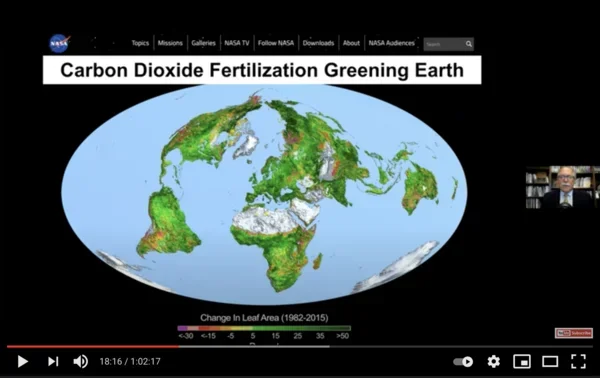
1) Earth is Greening
Screen Shot 2021-04-21 at 8.53.34 PM.webp

2) Greening of Sahara
Screen Shot 2021-04-21 at 8.53.53 PM.webp

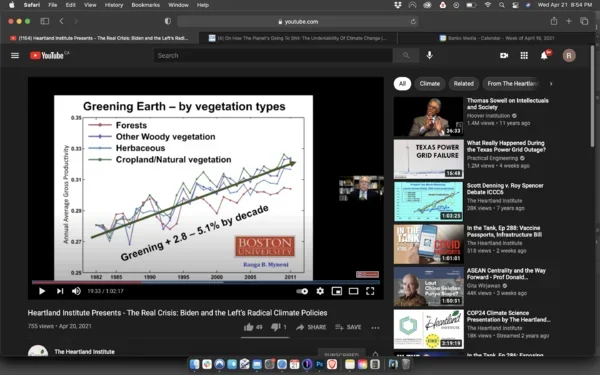
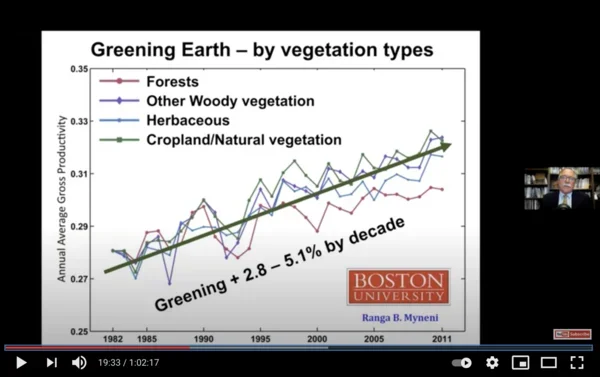
3) More vegetation
Screen Shot 2021-04-21 at 8.54.04 PM.webp

4) More vegetation
Screen Shot 2021-04-21 at 8.54.08 PM.webp

5) More Crops
Screen Shot 2021-04-21 at 8.54.23 PM.webp

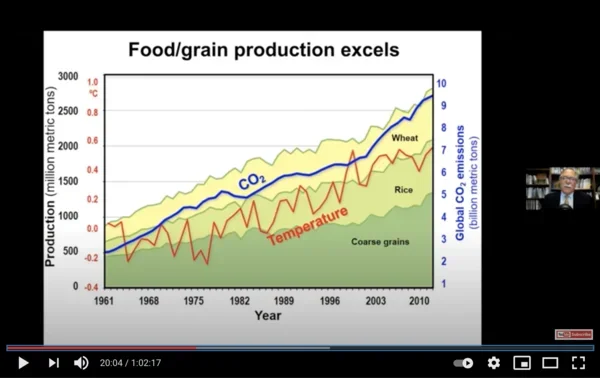
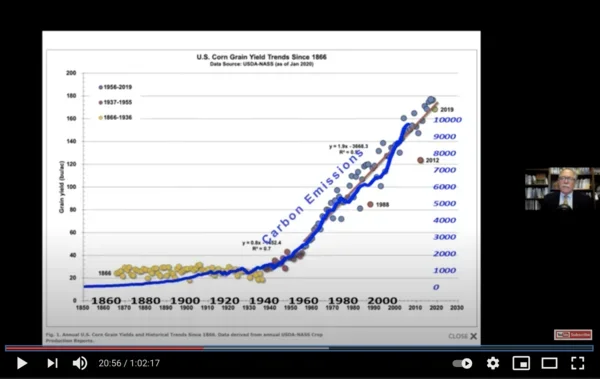
6) Greater Grain Yields
Screen Shot 2021-04-21 at 8.54.38 PM.webp

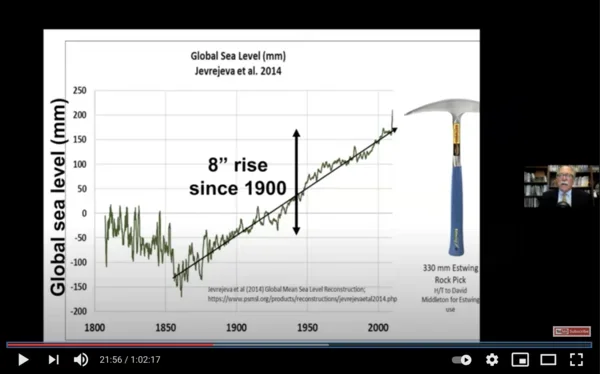
7) Modest Sea Level Rise
Screen Shot 2021-04-21 at 8.54.56 PM.webp

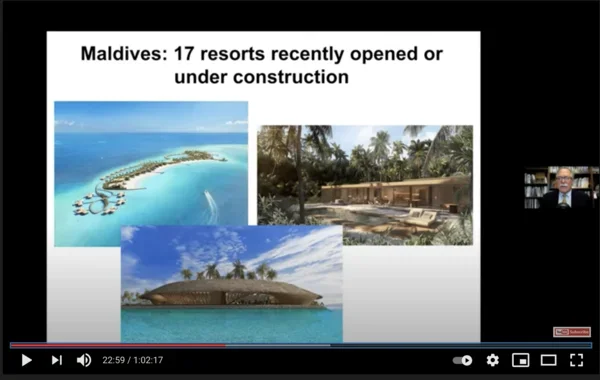
8) Maldives was supposed to be underwater by now and yet millions of $$$ are being invested
Screen Shot 2021-04-21 at 8.55.12 PM.webp
 
I read from bottom up and thought hey this is interesting until I saw the panelists and one of them was from junkscience.com.


Climate Hysterics BTFO + More C02 is Good


Some interesting slides start @18:00:

1) Earth is Greening
View attachment 37074

2) Greening of Sahara
View attachment 37075

3) More vegetation
View attachment 37076

4) More vegetation
View attachment 37077

5) More Crops
View attachment 37078

6) Greater Grain Yields
View attachment 37079

7) Modest Sea Level Rise
View attachment 37080

8) Maldives was supposed to be underwater by now and yet millions of $$$ are being invested
View attachment 37081


I read from bottom up and thought hey this is interesting until I saw the panelists and one of them was from junkscience.com.


come on arny you've got to do your research on the people who are presenting the information.


come on arny you've got to do your research on the people who are presenting the information.

This isn't an argument for outright ignoring what was presented. Sorry, it is a lazy strawman.

Also, try harder than we're gonna all burn in 10 years as a refutation to African building more energy stations. Do you have no heart? Don't poor Africans deserve a shot at living a better life?

We are collectively better off by adding more CO2 to the atmosphere, the benefit for plant life is self evident and that is fundamental to all life on Earth.

So I ask if you are so worried, why do you persist in living in Florida, which will supposedly disappear underwater in X years? Why not move to the mountains in Colorado? The Obama's did the same thing, they own a coastal mansion in Martha's Vineyard but harp on about Climate Change. It's hypocritical.

The truth is that the argument doesn't just cut one way and the CC alarmists act like religious fanatics. Furthermore the science is not settled, people said that to Einstein to dismiss him and he proved them all wrong.
 
Andrew Montford in The Daily Telegraph:


You can almost smell the change in the air. A growing number of influential voices are beginning to ask the questions that everyone has been avoiding for the last few years. Can we really nudge people into accepting net zero –the decarbonisation of the economy? Is it practical? Can we afford it any more? Or will it prove to be the white elephant to end all white elephants?

They are right to be concerned. The bill has already been estimated at £1 trillion pounds – £30,000 for every household in the country – an eye-watering figure that was probably unaffordable even before the pandemic hit. But a moment’s reflection shows that even this number is far too low to be plausible. Although it is a tidy sum, 30 grand doesn’t go far when you are trying to decarbonise. Heating the nation’s homes is a case in point. The cheapest way of doing this is a combination of insulation and replacement of gas-and oil-fired boilers with heat pumps. But a heat pump and ancillary equipment will set the average homeowner back well over £10,000, and retrofitting insulation could cost twice as much.


Once you have converted 30 million homes, your £1 trillion decarbonisation budget is pretty much gone, before even thinking about the cost of decarbonising the electricity generation system, replacing petrol and diesel cars with electric vehicles, installing charging equipment, reinforcing the grid to cope with the extra demand, and weaning industry, freight, transport, shipping and agriculture off fossil fuels. Quite what all this will really cost is anyone’s guess at the moment, but it will certainly be well over £100,000 per household.

Forcing people to spend their own money on that sort of scale is hardly going to be a vote-winner, but then coercion seems to be the order of the day. The Committee on Climate Change – the Government’s advisers on decarbonisation – are urging a ban on sales of inadequately insulated homes. Such a policy would land like a lead balloon in the Tory shires.

And that’s only the start. Decarbonisation’s big secret is that we still have no zero-carbon technology that can balance the electricity grid when it is driven by offshore wind farms. Contrary to common belief, batteries are not even a plausible solution, and hydrogen is so absurdly expensive as to make its use unacceptable.

We are therefore heading for a situation in which the only way to meet supply and demand in a long lull in the wind (like the one we have seen over the past two weeks) will be rationing. That’s what smart meters are for – they will enable grid managers to switch off appliances in your home so that the grid doesn’t collapse. Yes, your home may be cold, and the electric car may sit idle in the drive, but at least the lights haven’t gone out.

It doesn’t have to be like this. A study I helped publish a few years ago showed that an electricity grid powered by nuclear and gas could deliver similar emission reductions to the one we are building, but at a fraction of the cost. New technologies like so-called Allam Cycle gas turbines (essentially a gas-fired power station with built-in carbon capture) could make the system zero-carbon.

But instead, we in the UK will be stuck with vast, unreliable offshore wind farms, which seem to exist mainly to mop up subsidies. It emerged last week that several of our latest offshore installations are taking home a third of a billion pounds in subsidy each year. Every year. The latest and largest, Hornsea One, will soon be sucking up over half a billion pounds of annual subsidy.

We have done the easy bits of net zero – replacing coal with gas made economic sense in its own right. The next steps are going to be harder for Tory canvassers on the doorsteps, particularly in Red Wall seats, where heating bills are high, and the kind of money needed to decarbonise isn’t found down the back of the sofa.

The lessons of the fuel tax rises and the gilets jaunes are there. The public will endure being nudged towards decarbonisation a little bit, for a little while. But if a little nudge turns into a great big shove, they are likely to turn round and give their political overlords a bloody nose. And with the scale of the disaster that net zero is set to be, it will be richly deserved.

Andrew Montford is deputy director of the Global Warming Policy Forum
 
Anyone who denies nuclear is not taking the situation seriously. It is the obvious choice. Russia is going in the right direction.
 
It doesn’t have to be like this. A study I helped publish a few years ago showed that an electricity grid powered by nuclear and gas could deliver similar emission reductions to the one we are building, but at a fraction of the cost. New technologies like so-called Allam Cycle gas turbines (essentially a gas-fired power station with built-in carbon capture) could make the system zero-carbon.
here's the horseshit.

Anyone who denies nuclear is not taking the situation seriously. It is the obvious choice. Russia is going in the right direction.
no, no its not the obvious choice. its absolutely ridiculous to think building nuclear power plants will solve the problems we've got.
 
here, read doghouse doghouse 's favorite author


All the Futures that Will Not Happen​

2021 April 26
tags: The Future
by Ian Welsh
I’m often amused and saddened by the techno-optimists among us and their fantasies of great futures. Or even the woke folks who think that color and gender and whatnot are the great political frontier.
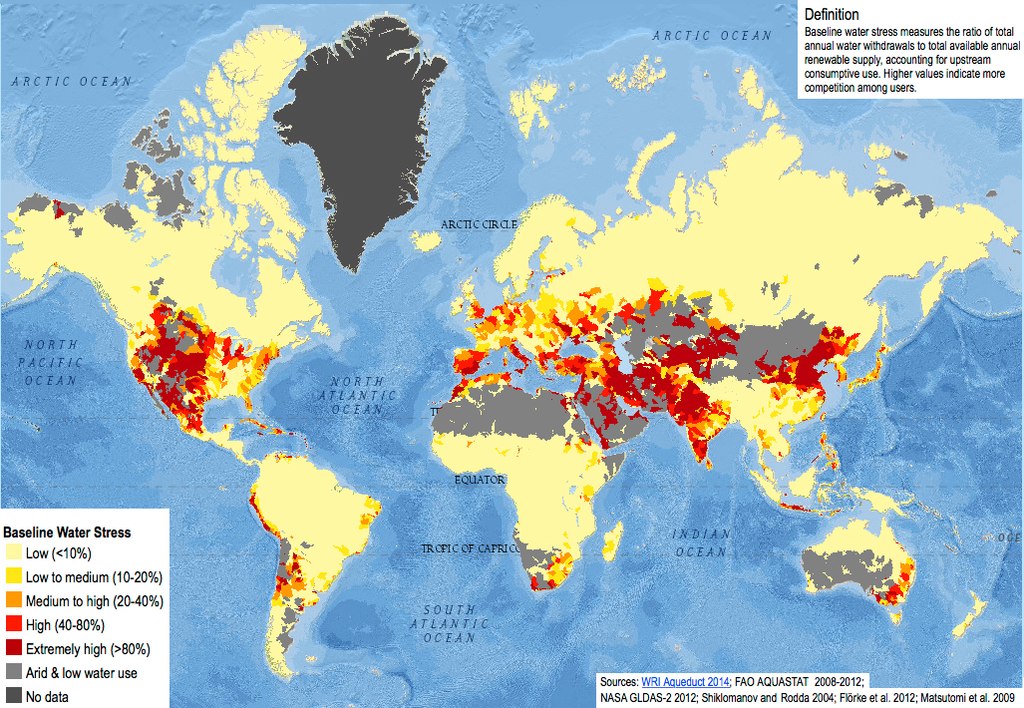
Let’s run through this. Water.
1024px-Baseline_water_stress.jpg

Baseline Water Stress
To put some numbers on it:
New modeling of the world’s groundwater levels finds aquifers — the soil or porous rocks that hold groundwater — in the Upper Ganges Basin area of India, southern Spain, and Italy could be depleted between 2040 and 2060.
In the US, aquifers in California’s Central Valley, Tulare Basin, and southern San Joaquin Valley, could be depleted within the 2030s. Aquifers in the southern High Plains, which supply groundwater to parts of Texas, Oklahoma, and New Mexico, could reach their limits between the 2050s and 2070s, according to the new research.
The thing to understand about this is that it doesn’t show permanent aquifer damage. If you overdraw aquifers, they lose the ability to hold as much water; that reduction is permanent.
Then there is fracking and other forms of poisoning groundwater, though how much is difficult to determine. (It’s not small.)
Meanwhile, the next thing is that important rivers tend to be driven by snowpack runoff and glaciers, but snowpack is becoming less and less and glaciers are receding. We’re talking about rivers like the GANGES and the Yangtse, not to mention all the European rivers which start in the Alps.
So we have groundwater depletion, some of it permanent. We have poisoned groundwater, and we have a reasonable expectation of reduced water in rivers, which in some cases will dry up entirely.
Let’s move on to more fun stuff: ecosystem collapse.
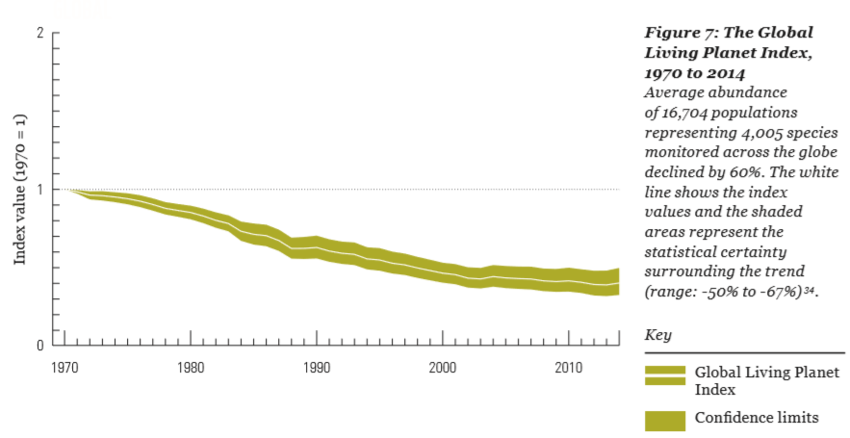
Wildlife-reduction.png

Wildlife Reduction
This number is from 1970, which was already very reduced. You can read accounts of what the Grand Banks were like originally: They could literally dip a pail into the ocean and come up with fish. We’ve massively reduced wildlife everywhere, insect populations are collapsing, and so on. Recent estimates are that the Amazon is no longer a net producer of oxygen, but now produces Carbon Dioxide.
Phytoplankton produce half the world’s oxygen. From 1950 to 2010, the population of phytoplankton dropped 40 percent. We can safely assume losses were not even, but are accelerating.
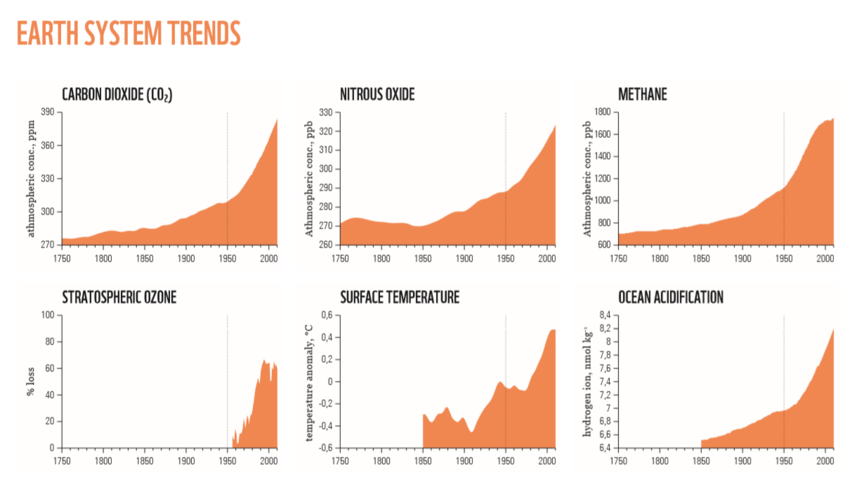
The general picture in terms of climate change is all bad:
environment-dashboard-2018.png

Climate Dashboard 2018
Note that first graph very carefully. There is NO sign in the actual numbers that we are doing anything of importance to stop this trend. Kyoto and Paris have achieved nothing, which is to be expected, since they were voluntary.
Let’s put this all together: massively rising temperatures; more extreme weather events; changes in climate, including rainfall patterns; massive depletion of aquifers at the same time as we can expect many rivers to lose volume or dry up; no effective political action.
One thing that India’s Covid crisis clarified for me is that India won’t be able to handle climate change, so let’s make some predictions.
India breaks up within 20 to 30 years. It dies amid great famines which kill two hundred million or more people. Bangladesh, of course, will go oven sooner, and unleash a tsunami of over 150 million refugees which India does not want, as they are mostly Muslim.
China breaks up 30 to 45 years from now and descends into warlordism. Prior to the breakup, there is a better-than-even chance of war with Russia for Siberia. Again, hundreds of millions of deaths.
The US is going to hurt worse than is obvious: Core areas will hit depletion, and many rivers will dry up. Large chunks of the Southwest will become completely uninhabitable. California’s population carrying capacity will drop massively, unless it moves to mass de-salinization (a dicey prospect).
We’ve just had ourselves a lesson in what exponential growth looks like. There is every reason to expect that at least some parts of ecosystem collapse and climate change will act that way: When break points are reached, they will accelerate, and nothing we can do will stop them. Worst case scenario is a hothouse Earth in which humanity goes extinct, but entirely plausible scenarios see the Earth losing half or more of its carrying capacity. The process will involve a lot of death, suffering, and war.
There’s a decent chance we get a marine inundation event. Rather than water rising by small amounts every year, at some point it rises very quickly, and large amounts of the coast flood permanently.
Remember that the “moderate” estimates have almost all been wrong. The “worst case” scenarios, for decades now, have been coming in correctly.

All of which is to say, whatever future you think you’re going to have, you need to run it past this lens. Does it survive this? Does society spend resources on whatever it is in the face of hundreds of millions of deaths and billions of refugees?
So, no, your future, whatever it is, unless you can instantiate it in the next two decades, probably isn’t going to happen.
The clock is ticking, we are running out of time to do whatever it is we want to do, and it is very likely that we are past the point of no return; that even if we were to go all-out to stop climate change and environmental collapse (we won’t), we could — at best — limit it to “losing half the population.”
lf you’re old enough, none of this matters, of course. But we are now at the point where, if you aren’t 60 and in poor health, or 70 and in good health, you’re probably going to get see at least the start of the really bad times.
We’ll come back to what this means in more depth later, but for now, just make your plans based on this understanding of what the future holds.
 
no, no its not the obvious choice. its absolutely ridiculous to think building nuclear power plants will solve the problems we've got.
How will it not solve the problems we got? It solves at least one problem.
 
here's the horseshit.


no, no its not the obvious choice. its absolutely ridiculous to think building nuclear power plants will solve the problems we've got.
The cleanest fuels we have, from a low carbon footprint position, factoring in term lifetime costs and being able to run our societies at the pitch we have become accustomed to are natural gas and nuclear.

Nuclear solves your carbon footprint energy problem with a click of the finger. You have other issues of what to do with spent fuel, but we're told the most important issue of our age is C02 in the atmosphere, which is literally killing the planet and St Greta has the power to see it like a mustard gas.
here, read doghouse doghouse 's favorite author


All the Futures that Will Not Happen​

2021 April 26
tags: The Future
by Ian Welsh

Wildlife-reduction.png

Recent estimates are that the Amazon is no longer a net producer of oxygen, but now produces Carbon Dioxide.
Phytoplankton produce half the world’s oxygen. From 1950 to 2010, the population of phytoplankton dropped 40 percent. We can safely assume losses were not even, but are accelerating.
The general picture in terms of climate change is all bad:
environment-dashboard-2018.png
The Amazon rainforests are net neutral as are all rainforests. They produce equal amounts of oxygen and CO2.
 
Great interview between Jordan Peterson and Bjorn Lomborg, introduction to Bjorn's books at the 4 minute mark, interview starts soon after:

 
Rising CO2 is causing plants to release less water to the atmosphere, researchers say

We should want more C02 in the atmosphere, every bit of plant life benefit from that. This talk of a 'hot-house earth' is what is ridiculous, we are not going to turn into Venus. Christ, we are still in an ice-age.

Thankfully countries in Africa will build more power stations and India told John Kerry to take a hike. If same power elite is the problem according to the commies and socialists, why are they looking to them as the saviors of the planet?
 
factoring in term lifetime costs and being able to run our societies at the pitch we have become accustomed to are natural gas and nuclear.
this statement is EXACTLY why your entire framing on this issue is cockeyed. we cannot keep things going the way they are. this capitalist system is ruining the planet at warp speed. i dont even know why you'd want to keep things the way they are. things suck.
Nuclear solves your carbon footprint energy problem with a click of the finger.
uh no, no it doesn't forget the fact that it takes around a decade to build a nuclear reactor, given the way the environment is deteriorating at warp speed how can you even begin to think that having a stationary building that can kill everyone in a 100 mile radius around is a good thing?
 
Rising CO2 is causing plants to release less water to the atmosphere, researchers say

We should want more C02 in the atmosphere, every bit of plant life benefit from that. This talk of a 'hot-house earth' is what is ridiculous, we are not going to turn into Venus. Christ, we are still in an ice-age.

Thankfully countries in Africa will build more power stations and India told John Kerry to take a hike. If same power elite is the problem according to the commies and socialists, why are they looking to them as the saviors of the planet?
jesus arny you really are just turning into a right wing dumbass online. did you even read the article? lets look at the some of the highlights:

"The increase in carbon dioxide by about 100 parts per million has had a profound effect on the number of stomata and, to a lesser extent, the size of the stomata," said Research Scientist in Biology and Professor Emeritus in Geology David Dilcher, the two papers' sole American coauthor. "Our analysis of that structural change shows there's been a huge reduction in the release of water to the atmosphere."
Most plants use a pore-like structure called stomata (singular: stoma) on the undersides of leaves to absorb carbon dioxide from the air. The carbon dioxide is used to build sugars, which can be used by the plant as energy or for incorporation into the plants' fibrous cell walls. Stomata also allow plants to "transpire" water, or release water to the atmosphere. Transpiration helps drive the absorption of water at the roots, and also cools the plants in the same way sweating cools mammals.

so yes, the plants are releasing less water into the atmosphere, but this process is actually hurting the plants and trees!

"The carbon cycle is important, but so is the water cycle," Dilcher said. "If transpiration decreases, there may be more moisture in the ground at first, but if there's less rainfall that may mean there's less moisture in ground eventually. This is part of the hyrdrogeologic cycle. Land plants are a crucially important part of it."

i don't know, does this sound like a good thing to you? probably because you're a headline reading dumbass.

That model suggests that a doubling of today's carbon dioxide levels -- from 390 parts per million to 800 ppm -- will halve the amount of water lost to the air, concluding in the second paper that "plant adaptation to rising CO2 is currently altering the hydrological cycle and climate and will continue to do so throughout this century."
Dilcher and his Dutch colleagues say that a drier atmosphere could mean less rainfall and therefore less movement of water through Florida's watersheds.
The Florida Everglades depend heavily on the slow, steady flow of groundwater from upstate. The siphoning of that water to development has raised questions about the future of the Everglades as a national resource.

so, in fact, this paper ultimately shows that this process is going to literally kill the everglades, one of the only natural resources we have here. and yet somehow, despite all this, you find the research to be a good thing because the headline furthers your narrative? who needs nature right???
 
only you would promote a video of two of the dumbest grifters online and think that its a good thing.
For a dumb ass, Jordan Peterson, has rode that wave to serious wealth in a short period of time. All down to the hipster, flipsters and finger-popping Wokesters who have sought to denigrate, de-platform and cancel him. Job well done, me thinks! Thanks for the ride.

You do know that dumbest of the grifters Youtube videos were bringing him in $60,000 revenue a month? His books sales on top and lecturing, we're giving a total $1.5M a month.

That was before he had to detox for his addiction to prescription drugs. But I don't hold that against him.

Anyway, the message of that video by non-climate change deniers, was you need to focus your efforts on the biggest bang-for-your-buck for raising humanity and the rest on R&D. Don't waste money on virtue signalling for very weak gains i.e. reducing the quality and prospects of life of the working and middle class for a 0.05% reduction in global temperatures.
 
For a dumb ass, Jordan Peterson, has rode that wave to serious wealth in a short period of time
yes, because he's a world class grifter.

You do know that dumbest of the grifters Youtube videos were bringing him in $60,000 revenue a month? His books sales on top and lecturing, we're giving a total $1.5M a month.
yes, it still amazes me to this day!

That was before he had to detox for his addiction to prescription drugs. But I don't hold that against him.
you don't? you should! the story is completely insane and his grifter daughter is even more wild than he is.

Anyway, the message of that video by non-climate change deniers, was you need to focus your efforts on the biggest bang-for-your-buck for raising humanity and the rest on R&D. Don't waste money on virtue signalling for very weak gains i.e. reducing the quality and prospects of life of the working and middle class for a 0.05% reduction in global temperatures.
none of this has anything to do with things other than staying on coal and natural gas.
 
How many years do we have until we will have stopped man-made climate change by establishing communism via taxation of the air all beings breathe?
 
How many years do we have until we will have stopped man-made climate change by establishing communism via taxation of the air all beings breathe?
It might not be necessary, the upcoming world war should take care of the excess population. Anyway, I never managed to give a single toss about "climate change" until the globalists used some random autistic little bitch to patronize the people. Now I will purposely go out of my way to shit on anything climate change related.
 
How many years do we have until we will have stopped man-made climate change by establishing communism via taxation of the air all beings breathe?
9 years, give or take a month.

As I've said all along: strange energy revolution this, one in which we will pay higher taxation for the privilege of experiencing virtue filled, yet reduced and diminished lives, but we will be happy.
It might not be necessary, the upcoming world war should take care of the excess population. Anyway, I never managed to give a single toss about "climate change" until the globalists used some random autistic little bitch to patronize the people. Now I will purposely go out of my way to shit on anything climate change related.
Back in the early 90s, I had an jazz piano album by Greta's grandfather, little did I know.

Reality is already beginning to bite...

Here in the Netherlands the sales of EV's are in free fall, the Greens vote in the recent elections was reduced significantly. The word is already out, everyone who bout EV's for the tax perks are finding them 3 to 4 more costly than petrol or diesel. Massively reduced range when travelling on motorways and in cold weather. The move from gas boilers to electric ones in government subsided housing has resulted in fuel poverty for the masses.

Meanwhile CNN and the rest of the MSM are preparing to gently segue from Covid panic to climate change emergency hysteria. It will will unfold as planned in the next 12-18 months.

They can only impose this by a culture of 1984 fear and daily hate. They've already done good job with the terminally Woke.
 

Users who are viewing this thread

Back
Top Bottom