Good Articles That Don't Deserve Their Own Threads


I'm a poor. Can't see it.

You should be able to read a couple of stories on the Economist's website free of charge. If you register, you can read some more without having to pay.

Anyway, here's the article:

* * * *

The silent minority
America’s largest ethnic group has assimilated so well that people barely notice it

ON A snow-covered bluff overlooking the Sheboygan river stands the Waelderhaus, a faithful reproduction of an Austrian chalet. It was built by the Kohler family of Wisconsin in the 1920s as a tribute to the homeland of their father, John Michael Kohler, who had immigrated to America in 1854 at the age of ten.
John Michael moved to Sheboygan, married the daughter of another German immigrant, who owned the local foundry, and took over his father-in-law’s business. He transformed it from a maker of ploughshares into a plumbing business. Today Kohler is the biggest maker of loos and baths in America. Herbert Kohler, the boss (and grandson of the founder), has done so well selling tubs that he has been able to pursue his other passion—golf—on a grand scale. The Kohler Company owns Whistling Straits, the course that will host the Ryder Cup in 2020.

German-Americans are America’s largest single ethnic group (if you divide Hispanics into Mexican-Americans, Cuban-Americans, etc). In 2013, according to the Census bureau, 46m Americans claimed German ancestry: more than the number who traced their roots to Ireland (33m) or England (25m). In whole swathes of the northern United States, German-Americans outnumber any other group (see map). Some 41% of the people in Wisconsin are of Teutonic stock.
Yet despite their numbers, they are barely visible. Everyone knows that Michael Dukakis is Greek-American, the Kennedy clan hail from Ireland and Mario Cuomo was an Italian-American. Fewer notice that John Boehner, the Speaker of the House of Representatives, and Rand Paul, a senator from Kentucky with presidential ambitions, are of German origin.
Companies founded by German-Americans tend to play down their roots, too: think of Pfizer, Boeing, Steinway, Levi Strauss or Heinz. Buried somewhere on their websites may be a brief note that “Steinway & Sons was founded in 1853 by German immigrant Henry Engelhard Steinway in a Manhattan loft on Varick Street”. But firms that play up their Germanic history—as Kohler does, in a short film shown at the Waelderhaus—are rare.
German immigrants have flavoured American culture like cinnamon in an Apfelkuchen. They imported Christmas trees and Easter bunnies and gave America a taste for pretzels, hot dogs, bratwursts and sauerkraut. They built big Lutheran churches wherever they went. Germans in Wisconsin launched America’s first kindergarten and set up Turnvereine, or gymnastics clubs, in Milwaukee, Cincinnati and other cities.

After a failed revolution in Germany in 1848, disillusioned revolutionaries decamped to America and spread progressive ideas. “Germanism, socialism and beer makes Milwaukee different,” says John Gurda, a historian. Milwaukee is the only big American city that had Socialist mayors for several decades, of whom two, Emil Seidel and Frank Zeidler, were of German stock. As in so many other countries where Germans have settled, they have dominated the brewing trade. Beer barons such as Jacob Best, Joseph Schlitz, Frederick Pabst and Frederick Miller made Milwaukee the kind of city that more or less had to call its baseball team the Brewers.
“Germans were not part of the colonial aristocracy,” says Rüdiger Lentz, director of the Aspen Institute Germany. Many Italian and Polish immigrants were middle-class, and they quickly became politically active. German immigrants tended to be poor farmers, which is why they headed for the vast fertile spaces of the Midwest. “The Italians stormed the city halls; the Germans stormed the beer halls,” went the saying.
During the first world war, parts of America grew hysterically anti-German. Some Germans were spat at in the street. The teaching of their language was banned in schools. Sauerkraut was renamed “liberty cabbage”. German books were burned, dachshunds kicked and German-Americans forced to buy war bonds to prove their patriotism. When New Ulm, a predominantly German town in Minnesota, refused to let its young men join the draft, the National Guard was sent in. After the war, German-Americans hunkered down. Many stopped speaking German and anglicised their names.
The second world war saw less anti-German hysteria, although some 10,000 German-Americans were interned as enemy aliens. President Franklin Roosevelt conspicuously appointed military commanders with names like Eisenhower and Nimitz to fight the Axis powers. But the Holocaust gave German-Americans yet another reason to hide their origins.

Today German-Americans are quietly successful. Their median household income, at $61,500, is 18% above the national norm. They are more likely to have college degrees than other Americans, and less likely to be unemployed. A whopping 97% of them speak only English at home.
They have assimilated and prospered without any political help specially tailored for their ethnic group. “The Greeks and the Irish have a far stronger support network and lobby groups than we do,” says Peter Wittig, Germany’s ambassador in America. There was no German-American congressional caucus until 2010, though there were caucuses for potatoes, bicycles and Albanian affairs. The German caucus has quickly grown to about 100 members, who lobby for trade and investment as well as the preservation of their common cultural heritage.
Five years ago a small German-American Heritage Museum opened in Washington, DC. “Germany has never been as popular as it is today,” says Petra Schürmann, the museum’s director. German fests and Oktoberfests have sprung up all over the country, and they are not only about brats and beer, but also about tracing genealogy and displaying traditional dress and craftsmanship. Stuff made by Germans sells. And Americans travel to Germany in droves: the young to hip Berlin and older folks to pretty Heidelberg.
On February 9th Angela Merkel, Germany’s chancellor, will meet Barack Obama in the White House. They will discuss the war in Ukraine, transatlantic trade, the wobbling euro zone and the upcoming G7 summit in Bavaria. Unlike Indian-Americans, who went wild when their new prime minister visited America, German-Americans will barely notice.
 
You should be able to read a couple of stories on the Economist's website free of charge. If you register, you can read some more without having to pay.

Yeah, I think it's like 10 articles a month or something? I subscribe, but I remember it being that.
 
http://mic.com/articles/110178/no-smoking-marijuana-doesn-t-make-you-more-likely-to-crash-your-car
No, Smoking Marijuana Doesn't Make You More Likely to Crash Your Car
By Jared Keller February 09, 2015

After Colorado and Washington state voted to legalize recreational marijuana in 2013, the legislation's opponents and health officials conjured up the specter of stoned drivers turning America's highways into death traps. They warned that increased pot use related to decriminalization would lead to an increase in traffic fatalities due to "drugged driving."

According to a massive new study from the government's safety body, they were wrong.

A new study from the National Highway Traffic Safety Administration concluded that driving after smoking marijuana does not make you more likely to get into a car crash, especially when compared to driving after alcohol consumption.

"The survey found that marijuana users are more likely to be involved in accidents, but that the increased risk may be due in part because marijuana users are more likely to be in groups at higher risk of crashes," the agency said in a statement. "In particular, marijuana users are more likely to be young men – a group already at high risk."

The study: In the largest study of its kind, NHTSA researchers studied 9,000 drivers over the past year to examine marijuana's impact on driving in the wake of legalization efforts across the country.

While the researchers found that 25% of marijuana users were more likely to crash than non-users (marijuana does impair your attention, after all), the researchers concluded that demographic differences like gender and age were far more compelling factors in explaining marijuana-related crashes: Younger drivers had a higher crash rate than older ones, and men crashed more than women.

"This study of crash risk found a statistically significant increase in unadjusted crash risk for drivers who tested positive for use of illegal drugs (1.21 times), and THC specifically (1.25 times)," explain researchers Richard P. Compton and Amy Berning. "However, analyses incorporating adjustments for age, gender, ethnicity and alcohol concentration level did not show a significant increase in levels of crash risk associated with the presence of drugs. This finding indicates that these other variables (age, gender ethnicity and alcohol use) were highly correlated with drug use and account for much of the increased risk associated with the use of illegal drugs and with THC."

A convoluted argument for prohibition: Of course, this isn't to say that marijuana is completely harmless, despite the fact that many teenagers who drive under the influence of marijuana say the drug "either improves their performance behind the wheel or is no hindrance." According to the National Institute on Drug Abuse, marijuana is the illicit drug most frequently found in the blood of drivers who have been involved in accidents; the NHTSA report found that marijuana shows up in about 7.6% of drivers involved in crashes.

"Drivers should never get behind the wheel impaired, and we know that marijuana impairs judgment, reaction times and awareness," said Jeff Michael, NHTSA's associate administrator for research and program development, in a statement. "These findings highlight the importance of research to better understand how marijuana use affects drivers so states and communities can craft the best safety policies."

But the specter of stoned drivers conjured up by ant-legalization advocates significantly overstates the potential dangers of marijuana-induced driving. In fact, highway fatalities have gone down since Colorado legalized marijuana, and a 2013 study of the 19 states that legalized medical marijuana show that overall traffic fatalities in those states have dropped rather than skyrocketing.

The anti-legalization scaremongering over stoned drivers is especially frustrating when the low rate of post-legalization traffic fatalities is compared to those from legal substances like alcohol. According to the NHTSA, drivers with a 0.08 percent breath alcohol level (the legal cutoff for drunken driving in most states) crashed four times more than sober drivers, while those with a 0.15 percent level were 12 times more likely to crash. Considering that more than 3.3 million people around the world suffered alcohol-related deaths in 2012 (while marijuana-related deaths amounted to, well, zero fatalities), the NHTSA reports suggests that paranoia over stoned drivers may be overblown.

Why it matters: When taken together, the NHTSA data effectively debunks one of the biggest myths about marijuana legalization: that an influx of legal weed will lead to legions of high motorists careening across the freeway in search of Funyuns and Mountain Dew. But while this research may be reassuring to budding potheads across the country, we certainly need more research: After all, recreational marijuana has only been legal in Colorado for just under a year.

"Researchers have developed a deep body of knowledge about the link between drinking, driving and risk. We know [drunken] driving kills," said NHTSA Administrator Mark Rosekind in a statement. "We have much to learn about how illegal drugs and prescription medicines affect highway safety. And developing that knowledge is urgent, because more and more drivers have these drugs in their systems."
 
http://www.nytimes.com/2015/02/12/h...-region&region=bottom-well&WT.nav=bottom-well

Smoking’s Toll on Health Is Even Worse Than Previously Thought, a Study Finds
However bad you thought smoking was, it’s even worse.

A new study adds at least five diseases and 60,000 deaths a year to the toll taken by tobacco in the United States. Before the study, smoking was already blamed for nearly half a million deaths a year in this country from 21 diseases, including 12 types of cancer.

The new findings are based on health data from nearly a million people who were followed for 10 years. In addition to the well-known hazards of lung cancer, artery disease, heart attacks, chronic lung disease and stroke, the researchers found that smoking was linked to significantly increased risks of infection, kidney disease, intestinal disease caused by inadequate blood flow, and heart and lung ailments not previously attributed to tobacco.

Even though people are already barraged with messages about the dangers of smoking, researchers say it is important to let the public know that there is yet more bad news.

“The smoking epidemic is still ongoing, and there is a need to evaluate how smoking is hurting us as a society, to support clinicians and policy making in public health,” said Brian D. Carter, an epidemiologist at the American Cancer Society and the first author of an article about the study, which appears in The New England Journal of Medicine. “It’s not a done story.”

In an editorial accompanying the article, Dr. Graham A. Colditz, from Washington University School of Medicine in St. Louis, said the new findings showed that officials in the United States had substantially underestimated the effect smoking has on public health. He said smokers, particularly those who depend on Medicaid, had not been receiving enough help to quit.

About 42 million Americans smoke — 15 percent of women and 21 percent of men — according to the Centers for Disease Control and Prevention. Research has shown that their death rates are two to three times higher than those of people who have never smoked, and that on average, they die more than a decade before nonsmokers. Smokers are more than 20 times as likely as nonsmokers to die of lung cancer. Poor people and those with less formal education are the most likely to smoke.

Mr. Carter said he had been inspired to dig deeper into the causes of death in smokers after taking an initial look at data from five large health surveys being conducted by other researchers. The participants were 421,378 men and 532,651 women 55 and older, including nearly 89,000 current smokers.

As expected, death rates were higher among the smokers. But diseases known to be caused by tobacco accounted for only 83 percent of the excess deaths in people who smoked.

“I thought, ‘Wow, that’s really low,’ ” Mr. Carter said. “We have this huge cohort. Let’s get into the weeds, cast a wide net and see what is killing smokers that we don’t already know.”

The research was paid for by the American Cancer Society, and Mr. Carter worked with scientists from four universities and the National Cancer Institute.

The study was observational, meaning that it looked at people’s habits, like smoking, and noted statistical correlations between their behavior and their health. Correlation does not prove a cause-and-effect relationship, so this kind of research is not considered as strong as experiments in which participants are assigned at random to treatments or placebos and then compared. But people cannot ethically be instructed to smoke for a study, so a lot of the data on smoking’s effects on people comes from observational studies.

Analyzing deaths among the participants from 2000 to 2011, the researchers found that, compared with people who had never smoked, smokers were about twice as likely to die from infections, kidney disease, respiratory ailments not previously linked to tobacco, and hypertensive heart disease, in which high blood pressure leads to heart failure. Smokers were also six times more likely to die from a rare illness caused by insufficient blood flow to the intestines.

Mr. Carter said he had confidence in the findings because, biologically, it made sense that those conditions were related to tobacco. Smoking can weaken the immune system, increasing the risk of infection, he said. It is also known to cause diabetes, high blood pressure and artery disease, all of which can lead to kidney problems. Artery disease can also choke off the blood supply to the intestines. Lung damage from smoke, combined with increased vulnerability to infection, can lead to multiple respiratory illnesses.

Two other observations supported the findings, he said. One was that the more heavily a person smoked, the greater the added risks. The second was that among former smokers, the risks diminished over time. In general, such effects, known as a dose response, suggest that an observed correlation is more than a coincidence.

The study also found small increases in the risks of breast and prostate cancer among smokers. Mr. Carter said those findings were not as strong as the others, adding that additional research could help determine whether there were biological mechanisms that would support a connection.

A 2014 report by the surgeon general’s office said the evidence for a causal connection between smoking and breast cancer was “suggestive but not sufficient.” The same report found no evidence that smoking caused prostate cancer, but it noted that in men who did have prostate cancer, smoking seemed to worsen the outcome.

The diseases that had previously been established by the surgeon general as caused by smoking were cancers of the esophagus, stomach, colon, liver, pancreas, larynx, lung, bladder, kidney, cervix, lip and oral cavity; acute myeloid leukemia; diabetes; heart disease; stroke; atherosclerosis; aortic aneurysm; other artery diseases; chronic lung disease; pneumonia; influenza; and tuberculosis.
 

It reminds me of the bullshit politicians spread in their lies about not raising taxes... sure they didn't raise the actual rate, but they increase everything, every year, for things like parking fines, sales taxes, property taxes and fees for every piece of shit you have to do like renew a drivers license.

We're taxed to fucking death.

These proxy organizations are exist to fund lobbying and fuck the government as much as humanly possible. You have huge government which republican bullies and democrat pussies created happily with each other.
 
I agree. While I am no fan of the average bureaucrat, there are jobs that the government can do much more efficiently and a hell of a lot cheaper than these pseudo agencies which are the public sector version of bloatware.


This however, made me laugh.
These proxy organizations are exist to fund lobbying and fuck the government

52812260.jpg
 
New Study Finds Therapy, Antidepressants Equally Effective At Monetizing Depression | The Onion - America's Finest News Source

New Study Finds Therapy, Antidepressants Equally Effective At Monetizing Depression
News in Brief • Science & Technology • science • health • mental health • medicine • ISSUE 51•07 • Feb 17, 2015

NORMAN, OK—Noting that similar outcomes were achieved under both approaches, a landmark decade-long study of mental health treatment options published Tuesday has found that talk therapy and antidepressant medications are equally effective at monetizing clinical depression. “Our data indicate that regular counseling sessions and prescription drugs have similarly high success rates in generating large sums of money from the clinically depressed,” said Katherine Hutton of the University of Oklahoma, the study’s lead author, noting that both methods demonstrated consistent positive earnings across chronic, episodic, and seasonal depression cases. “While some people make tremendous profits with drugs, others see substantial revenues from therapy. Together, these are two very powerful tools for improving the health care industry’s bottom line.” The study concluded that when both approaches are combined, financial results are likely to be reached far more quickly than with one method alone.
 
Meet the serial failures in charge of protecting America’s online privacy | PandoDaily

Meet the serial failures in charge of protecting America’s online privacy
By Mark Ames
On February 15, 2015

Earlier this week, McClatchey published an article reminding readers of something that can’t be repeated enough: Thanks to the 1986 Electronic Communications Privacy Act, the government can read all your emails over 180 days old without a warrant. That’s what the law says — and yet it remains obscure enough that every time some national media reminds us, it still shocks the senses.

McClatchy writes:

Little known to most Americans, ambiguous language in a communications law passed in 1986 extends Fourth Amendment protections against unreasonable search and seizure only to electronic communications sent or received fewer than 180 days ago.

The language, known as the “180-day rule,” allows government officials to treat any emails, text messages or documents stored on remote servers – popularly known as the cloud – as “abandoned” and therefore accessible using administrative subpoena power, a tactic that critics say circumvents due process.

As you rush to purge your Gmail and Dropbox accounts, however, be forewarned that even deleted files still could be fair game as long as copies exist on a third-party server somewhere.

Unsurprisingly, there have been attempts over the years to reform the law, but so far they’ve all ended in failure. And it’s when we start to dig into the reason for those failures that things do get surprising.

As it turns out, many of the “privacy activists” who are supposed to protect us from laws like this, and who are today leading the crusade against the 1986 ECPA law, are the same people and organizations who colluded with the government to put that law on the books in the first place.

Today there’s a big push for a bill called, somewhat confusingly, the Electronic Communications Privacy Act Amendments Act that’s supposed to remedy this giant hole in online privacy. The bill is co-authored by progressive Democrat (and occasional Batman cameo) Sen. Patrick Leahy of Vermont, and Tea Party Republican Sen. Mike Lee of Utah. Perhaps more importantly, the ECPA Amendment Act — and its House version, the “Email Privacy Act” — has the support of both the Silicon Valley Establishment—Google, Apple, Facebook, Amazon et al—and the civil libertarian establishment: the ACLU, the Electronic Frontier Foundation, the Center for Democracy and Technology, and others.

But as McClatchy notes, this “solution” to the earlier law’s problem turns out to create a brand new privacy problem: Under both Leahy’s Senate bill and the House “Email Privacy Act,” the same government snoops will still be able to access all email user metadata:

In other words, the Email Privacy Act would not extend Fourth Amendment protections to “non-content” data. Even if the bill becomes law, customers’ names, locations, addresses, routing information and subscriber network addresses still could be subpoenaed without a warrant and without notice, although accessing the content of their conversations would require the authorization of a judicial magistrate or judge.

As we learned from the Snowden secrets, government intelligence agencies like the NSA are at least as interested in collecting user metadata as they are in collecting content. Yet the wonderful solution, the Leahy-Lee bill, allows warrantless government surveillance of our email metadata:

“the government may use an administrative or grand jury subpoena in order to obtain certain kinds of electronic communication records from a 1service provider, including customer name, address, session time records, length of service information, subscriber number and temporarily assigned network address, and means and source of payment information.”

So that raises the question: Why are these leading civil libertarian/privacy advocates lobbying for a law that doesn’t protect our privacy or extend Fourth Amendment protections to our email metadata?

To begin understanding that, you first have to look at the names of the folks pushing the Electronic Communications Privacy Act Amendment Act “fix” to the 1986 Electronic Communications Privacy Act, and then compare them to those involved in the 1986 law. Wouldn’t you know it: The 1986 law was co-sponsored by a younger Sen. Patrick Leahy, and came into being thanks to the lobbying efforts of the ACLU and its chief legislative counsel, Jerry Berman.

In my last depressing story about how the ACLU colluded with the CIA to write the Reagan-era law that jailed CIA whistleblower John Kiriakou, I wrote about how Jerry Berman was one of the key ACLU collaborators in crafting that anti-whistleblower law with CIA director Bill Casey’s people. I also revealed Berman’s controversial role—as executive director of the Electronic Frontier Foundation— in collaborating with the FBI in passing the 1994 Digital Telephony Bill, which expanded FBI surveillance of the Internet.

In 1986, Berman served as the ACLU’s chief legislative counsel in Washington DC, and he also led a new ACLU project focused on privacy and the new fast-growing technology sector: The ACLU Project on Privacy and Technology. In these capacities, Berman and the ACLU provided the necessary liberal cover to bring together industry and government surveillance interests to craft the new bill.

As the New York Times reported in late 1986, in an article headlined “Tactical Alliances and the A.C.L.U.”:

Michael F. Cavanagh, executive director of the Electronic Mail Association, a trade group, said the A.C.L.U. had “played a central role” in assembling the coalition that won approval for the Electronic Communications Privacy Act of 1986. The law updates Federal wiretap statutes to protect the privacy of cellular telephone calls, computer data communications and satellite television transmissions.

In another article about the bill, the Times quotes Berman selling it on “philosophical” grounds rather than merely economic, deftly leveraging the ACLU’s progressive credibility:

For the American Civil Liberties Union, a major force behind the bill, the commitment is philosophical rather than economic. “This is a very good bill,” said Jerry Berman, the head of the union’s Privacy Technology Project, who worked to bring the business groups together. “It demonstrates that you can put together a privacy coalition and make it work.”

Until recently, Berman’s bios and “about” page have boasted of his central role in passing the terrible 1986 ECPA law. That, and Berman’s role as founder of the ACLU’s “Projects on Privacy and Technology” established his credibility in Washington as the premiere hi-tech lobbyist, particularly on the broad field of privacy and speech.

In 1992, Berman left the ACLU for the Electronic Frontier Foundation to take the Silicon Valley techno-libertarian revolution to Washington… bringing the EFF’s dual-purpose function as online privacy advocate, and lobby front for its Big Tech funders’ interests, into the lair of the federal leviathan. In 1994, Berman brought other key people from the ACLU’s Projects on Privacy and Technology into the Electronic Frontier Foundation with him—Janlori Goldman and Daniel Weitzner. Berman’s former ACLU team, now at the EFF, went to work in collaboration with the FBI and with—who else?—Sen. Patrick Leahy to draft the Digital Telephony Law that expanded FBI surveillance of the Internet, and nearly destroyed the EFF.

The subtitle to an old Wired magazine article from 1994 shows just how silly (and stagnant) the EFF’s cyber-revolutionary expectations were—and how badly, in a familiar old-economy way, everything turned out when this same crowd led that reform bill:

The Electronic Frontier Foundation went to Washington to “reverse-engineer government, hack politics down to its component parts, and fix it.” Then it helped pass the FBI’s loathsome “let’s-just-wiretap-everyone” Digital Telephony Bill. And discovered it was Washington that had reverse-engineered the EFF, driving it into dissension, debt, disgrace – and right out of town

After that fiasco, Berman and his former ACLU Project on Privacy and Technology team left the EFF to found the Center for Democracy and Technology (CDT), which has remained a top DC lobby group for Big Tech ever since. (Meanwhile back at the ACLU, the Berman “privacy and technology” project reappeared under the similarly-named “ACLU Projects on Speech, Privacy and Technology” — led today by the ACLU’s Ben Wizner, Edward Snowden’s lawyer, along with online privacy celebrity-activist Chris Soghoian.)

Which brings us to today, in which we find ourselves dealing with the appalling consequences of the 1986 bill cobbled together by the ACLU, led by Jerry Berman, and co-sponsored by Patrick Leahy. First of all, why didn’t the ACLU, the EFF, the CDT or their crowd warn us all these decades? Why did it take them so goddamn long to tell us, “Oops! We screwed up! The bill we wrote to protect you actually allows the government total access to all your 180-plus-old email correspondences, we just forgot to scare you about it all these decades!”

Well, in fact they still haven’t done that, because that would mean admitting they’re part of the problem. Instead, these same outfits are shaking their fists in righteous outrage over the law they helped pass. On the ACLU’s webpage attacking the 1986 ECTA, there’s not a single mention of the “central role” that the organization played in getting it passed.

The same goes with the website for Digital Due Process the main lobby coalition fighting to replace bad ECPA with good, new & improved EPCA-Amendment Act. Digital Due Process was founded in 2010 by none other than Jerry Berman; it brings together all the big names in Silicon Valley—Google, Apple, Facebook—with all the big civil libertarian groups like the ACLU, EFF, CDT and so on: funders and funded, all working selflessly on our behalf to protect us, or so they tell us. And their lead man writing the badly flawed “amendment” law that’s supposed to solve the problem: Sen. Patrick Leahy.

The same people and same civil libertarian groups that have failed us over and over are about to fail us all over again. Aren’t we lucky to have them on our side?
 
The disappeared: Chicago police detain Americans at abuse-laden 'black site' | US news | The Guardian

The disappeared: Chicago police detain Americans at abuse-laden 'black site'


The Chicago police department operates an off-the-books interrogation compound, rendering Americans unable to be found by family or attorneys while locked inside what lawyers say is the domestic equivalent of a CIA black site.

The facility, a nondescript warehouse on Chicago’s west side known as Homan Square, has long been the scene of secretive work by special police units. Interviews with local attorneys and one protester who spent the better part of a day shackled in Homan Square describe operations that deny access to basic constitutional rights.

Alleged police practices at Homan Square, according to those familiar with the facility who spoke out to the Guardian after its investigation into Chicago police abuse, include:

  • Keeping arrestees out of official booking databases.
  • Beating by police, resulting in head wounds.
  • Shackling for prolonged periods.
  • Denying attorneys access to the “secure” facility.
  • Holding people without legal counsel for between 12 and 24 hours, including people as young as 15.
At least one man was found unresponsive in a Homan Square “interview room” and later pronounced dead.

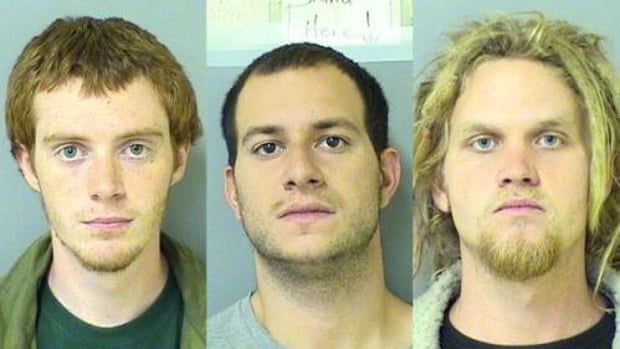
Brian Jacob Church, a protester known as one of the “Nato Three”, was held and questioned at Homan Square in 2012 following a police raid. Officers restrained Church for the better part of a day, denying him access to an attorney, before sending him to a nearby police station to be booked and charged.

2c3fb8ad-fcf1-433a-ab46-7d8c6c4ce514-620x372.jpeg

Chicago’s Homan Square 'black site': surveillance, military-style vehicles and a metal cage
Read more
“Homan Square is definitely an unusual place,” Church told the Guardian on Friday. “It brings to mind the interrogation facilities they use in the Middle East. The CIA calls them black sites. It’s a domestic black site. When you go in, no one knows what’s happened to you.”

The secretive warehouse is the latest example of Chicago police practices that echo the much-criticized detention abuses of the US war on terrorism. While those abuses impacted people overseas, Homan Square – said to house military-style vehicles, interrogation cells and even a cage – trains its focus on Americans, most often poor, black and brown.

Unlike a precinct, no one taken to Homan Square is said to be booked. Witnesses, suspects or other Chicagoans who end up inside do not appear to have a public, searchable record entered into a database indicating where they are, as happens when someone is booked at a precinct. Lawyers and relatives insist there is no way of finding their whereabouts. Those lawyers who have attempted to gain access to Homan Square are most often turned away, even as their clients remain in custody inside.

“It’s sort of an open secret among attorneys that regularly make police station visits, this place – if you can’t find a client in the system, odds are they’re there,” said Chicago lawyer Julia Bartmes.

Chicago civil-rights attorney Flint Taylor said Homan Square represented a routinization of a notorious practice in local police work that violates the fifth and sixth amendments of the constitution.

“This Homan Square revelation seems to me to be an institutionalization of the practice that dates back more than 40 years,” Taylor said, “of violating a suspect or witness’ rights to a lawyer and not to be physically or otherwise coerced into giving a statement.”

Much remains hidden about Homan Square. The Chicago police department did not respond to the Guardian’s questions about the facility. But after the Guardian published this story, the department provided a statement insisting, without specifics, that there is nothing untoward taking place at what it called the “sensitive” location, home to undercover units.

“CPD [Chicago police department] abides by all laws, rules and guidelines pertaining to any interviews of suspects or witnesses, at Homan Square or any other CPD facility. If lawyers have a client detained at Homan Square, just like any other facility, they are allowed to speak to and visit them. It also houses CPD’s Evidence Recovered Property Section, where the public is able to claim inventoried property,” the statement said, something numerous attorneys and one Homan Square arrestee have denied.

“There are always records of anyone who is arrested by CPD, and this is not any different at Homan Square,” it continued.

The Chicago police statement did not address how long into an arrest or detention those records are generated or their availability to the public. A department spokesperson did not respond to a detailed request for clarification.

When a Guardian reporter arrived at the warehouse on Friday, a man at the gatehouse outside refused any entrance and would not answer questions. “This is a secure facility. You’re not even supposed to be standing here,” said the man, who refused to give his name.

A former Chicago police superintendent and a more recently retired detective, both of whom have been inside Homan Square in the last few years in a post-police capacity, said the police department did not operate out of the warehouse until the late 1990s.

But in detailing episodes involving their clients over the past several years, lawyers described mad scrambles that led to the closed doors of Homan Square, a place most had never heard of previously. The facility was even unknown to Rob Warden, the founder of Northwestern University Law School’s Center on Wrongful Convictions, until the Guardian informed him of the allegations of clients who vanish into inherently coercive police custody.

“They just disappear,” said Anthony Hill, a criminal defense attorney, “until they show up at a district for charging or are just released back out on the street.”

‘Never going to see the light of day’: the search for the Nato Three, the head wound, the worried mom and the dead man


‘They were held incommunicado for much longer than I think should be permitted in this country – anywhere – but particularly given the strong constitutional rights afforded to people who are being charged with crimes,” said Sarah Gelsomino, the lawyer for Brian Jacob Church. Photograph: Phil Batta/Guardian
Jacob Church learned about Homan Square the hard way. On May 16 2012, he and 11 others were taken there after police infiltrated their protest against the Nato summit. Church says officers cuffed him to a bench for an estimated 17 hours, intermittently interrogating him without reading his Miranda rights to remain silent. It would take another three hours – and an unusual lawyer visit through a wire cage – before he was finally charged with terrorism-related offenses at the nearby 11th district station, where he was made to sign papers, fingerprinted and photographed.

In preparation for the Nato protest, Church, who is from Florida, had written a phone number for the National Lawyers Guild on his arm as a precautionary measure. Once taken to Homan Square, Church asked explicitly to call his lawyers, and said he was denied.

“Essentially, I wasn’t allowed to make any contact with anybody,” Church told the Guardian, in contradiction of a police guidance on permitting phone calls and legal counsel to arrestees.

Church’s left wrist was cuffed to a bar behind a bench in windowless cinderblock cell, with his ankles cuffed together. He remained in those restraints for about 17 hours.

“I had essentially figured, ‘All right, well, they disappeared us and so we’re probably never going to see the light of day again,’” Church said.

500.jpg

Brian Jacob Church, Jared Chase and Brent Vincent Betterly, known as the ‘Nato Three’. Photograph: AP/Cook County sheriff's office
Though the raid attracted major media attention, a team of attorneys could not find Church through 12 hours of “active searching”, Sarah Gelsomino, Church’s lawyer, recalled. No booking record existed. Only after she and others made a “major stink” with contacts in the offices of the corporation counsel and Mayor Rahm Emanuel did they even learn about Homan Square.

They sent another attorney to the facility, where he ultimately gained entry, and talked to Church through a floor-to-ceiling chain-link metal cage. Finally, hours later, police took Church and his two co-defendants to a nearby police station for booking.

After serving two and a half years in prison, Church is currently on parole after he and his co-defendants were found not guilty in 2014 of terrorism-related offenses but guilty of lesser charges of possessing an incendiary device and the misdemeanor of “mob action”.

It’s almost like they throw a black bag over your head and make you disappear for a day or two

Brian Jacob Church
The access that Nato Three attorneys received to Homan Square was an exception to the rule, even if Jacob Church’s experience there was not.

Three attorneys interviewed by the Guardian report being personally turned away from Homan Square between 2009 and 2013 without being allowed access to their clients. Two more lawyers who hadn’t been physically denied described it as a place where police withheld information about their clients’ whereabouts. Church was the only person who had been detained at the facility who agreed to talk with the Guardian: their lawyers say others fear police retaliation.

One man in January 2013 had his name changed in the Chicago central bookings database and then taken to Homan Square without a record of his transfer being kept, according to Eliza Solowiej of Chicago’s First Defense Legal Aid. (The man, the Guardian understands, wishes to be anonymous; his current attorney declined to confirm Solowiej’s account.) She found out where he was after he was taken to the hospital with a head injury.

“He said that the officers caused his head injuries in an interrogation room at Homan Square. I had been looking for him for six to eight hours, and every department member I talked to said they had never heard of him,” Solowiej said. “He sent me a phone pic of his head injuries because I had seen him in a police station right before he was transferred to Homan Square without any.”

Bartmes, another Chicago attorney, said that in September 2013 she got a call from a mother worried that her 15-year-old son had been picked up by police before dawn. A sympathetic sergeant followed up with the mother to say her son was being questioned at Homan Square in connection to a shooting and would be released soon. When hours passed, Bartmes traveled to Homan Square, only to be refused entry for nearly an hour.

An officer told her, “Well, you can’t just stand here taking notes, this is a secure facility, there are undercover officers, and you’re making people very nervous,” Bartmes recalled. Told to leave, she said she would return in an hour if the boy was not released. He was home, and not charged, after “12, maybe 13” hours in custody.

On February 2, 2013, John Hubbard was taken to Homan Square. Hubbard never walked out. The Chicago Tribune reported that the 44-year old was found “unresponsive inside an interview room”, and pronounced dead. After publication, the Cook County medical examiner told the Guardian that the cause of death was determined to be heroin intoxication.

Homan Square is hardly concerned exclusively with terrorism. Several special units operate outside of it, including the anti-gang and anti-drug forces. If police “want money, guns, drugs”, or information on the flow of any of them onto Chicago’s streets, “they bring them there and use it as a place of interrogation off the books,” Hill said.

‘That scares the hell out of me’: a throwback to Chicago police abuse with a post-9/11 feel


‘The real danger in allowing practices like Guantanamo or Abu Ghraib is the fact that they always creep into other aspects,’ criminologist Tracy Siska told the Guardian. Photograph: Chandler West/Guardian
A former Chicago detective and current private investigator, Bill Dorsch, said he had not heard of the police abuses described by Church and lawyers for other suspects who had been taken to Homan Square. He has been permitted access to the facility to visit one of its main features, an evidence locker for the police department. (“I just showed my retirement star and passed through,” Dorsch said.)

Transferring detainees through police custody to deny them access to legal counsel, would be “a career-ender,” Dorsch said. “To move just for the purpose of hiding them, I can’t see that happening,” he told the Guardian.

Richard Brzeczek, Chicago’s police superintendent from 1980 to 1983, who also said he had no first-hand knowledge of abuses at Homan Square, said it was “never justified” to deny access to attorneys.

“Homan Square should be on the same list as every other facility where you can call central booking and say: ‘Can you tell me if this person is in custody and where,’” Brzeczek said.

“If you’re going to be doing this, then you have to include Homan Square on the list of facilities that prisoners are taken into and a record made. It can’t be an exempt facility.”

Indeed, Chicago police guidelines appear to ban the sorts of practices Church and the lawyers said occur at Homan Square.

A directive titled “Processing Persons Under Department Control” instructs that “investigation or interrogation of an arrestee will not delay the booking process,” and arrestees must be allowed “a reasonable number of telephone calls” to attorneys swiftly “after their arrival at the first place of custody.” Another directive, “Arrestee and In-Custody Communications,” says police supervisors must “allow visitation by attorneys.”

Attorney Scott Finger said that the Chicago police tightened the latter directive in 2012 after quiet complaints from lawyers about their lack of access to Homan Square. Without those changes, Church’s attorneys might not have gained entry at all. But that tightening – about a week before Church’s arrest – did not prevent Church’s prolonged detention without a lawyer, nor the later cases where lawyers were unable to enter.

The combination of holding clients for long periods, while concealing their whereabouts and denying access to a lawyer, struck legal experts as a throwback to the worst excesses of Chicago police abuse, with a post-9/11 feel to it.

On a smaller scale, Homan Square is “analogous to the CIA’s black sites,” said Andrea Lyon, a former Chicago public defender and current dean of Valparaiso University Law School. When she practiced law in Chicago in the 1980s and 1990s, she said, “police used the term ‘shadow site’” to refer to the quasi-disappearances now in place at Homan Square.

I’ve never known any kind of organized, secret place where they go and hold somebody before booking for hours and hours

James Trainum, former detective, Washington DC
“Back when I first started working on torture cases and started representing criminal defendants in the early 1970s, my clients often told me they’d been taken from one police station to another before ending up at Area 2 where they were tortured,” said Taylor, the civil-rights lawyer most associated with pursuing the notoriously abusive Area 2 police commander Jon Burge. “And in that way the police prevent their family and lawyers from seeing them until they could coerce, through torture or other means, confessions from them.”

Police often have off-site facilities to have private conversations with their informants. But a retired Washington DC homicide detective, James Trainum, could not think of another circumstance nationwide where police held people incommunicado for extended periods.

“I’ve never known any kind of organized, secret place where they go and just hold somebody before booking for hours and hours and hours. That scares the hell out of me that that even exists or might exist,” said Trainum, who now studies national policing issues, to include interrogations, for the Innocence Project and the Constitution Project.

Regardless of departmental regulations, police frequently deny or elide access to lawyers even at regular police precincts, said Solowiej of First Defense Legal Aid. But she said the outright denial was exacerbated at Chicago’s secretive interrogation and holding facility: “It’s very, very rare for anyone to experience their constitutional rights in Chicago police custody, and even more so at Homan Square,” Solowiej said.

Church said that one of his more striking memories of Homan Square was the “big, big vehicles” police had inside the complex that “look like very large MRAPs that they use in the Middle East.”

Cook County, home of Chicago, has received some 1,700 pieces of military equipment from a much-criticized Pentagon program transferring military gear to local police. It includes a Humvee, according to a local ABC News report.

Tracy Siska, a criminologist and civil-rights activist with the Chicago Justice Project, said that Homan Square, as well as the unrelated case of ex-Guantánamo interrogator and retired Chicago detective Richard Zuley, showed the lines blurring between domestic law enforcement and overseas military operations.

“The real danger in allowing practices like Guantánamo or Abu Ghraib is the fact that they always creep into other aspects,” Siska said.

“They creep into domestic law enforcement, either with weaponry like with the militarization of police, or interrogation practices. That’s how we ended up with a black site in Chicago.”
 
^ that belongs in cop tyranny. Regardless, this is what you get when you elect pieces of shit like Rahm Emanuel.
 
I was reading that earlier. While I have all the obligatory outrage at this, I can't help but feel these protest groups need better names. I mean, "Nato Three"? C'mon you hippie douchebags, you can do better than that.
 
Witnesses, suspects or other Chicagoans who end up inside do not appear to have a public, searchable record entered into a database indicating where they are, as happens when someone is booked at a precinct.

other Chicagoans like what, elementary school tours? And how do other Chicagoans end up inside if they are not a witness or a suspect. some poor writing.

“I had essentially figured, ‘All right, well, they disappeared us and so we’re probably never going to see the light of day again,’” Church said.

right.
 
Sweet Briar College Closing in August - US News

Shock over Sweet Briar’s closing turns to somber questions - The Washington Post

Don't know much about colleges closing down, is this more common than I think?

I found this funny:

Many alumnae said the news was completely out of the blue. They knew there had been an addition to the library recently, a new gym built several years ago, a cafeteria before that; they knew there were struggles, as at many private liberal-arts colleges, but they weren’t told how dire the school’s finances were and how absolute the choices about its future had come to be.
 
The untold story of how the sugar industry shaped key government research about your teeth - The Washington Post

The untold story of how the sugar industry shaped key government research about your teeth

By Roberto A. Ferdman March 11 at 12:37 PM
according to a new report.

Decades-old documents have surfaced showing that the powerful U.S. sugar industry dramatically influenced the government's medical research on dental care—and ultimately what officials recommended for American diets.

Despite a widespread understanding that sugar played a key role in tooth decay, sugar industry leaders advocated for policies that did not recommend people eat less sugar, according to an archive of industry letters dating back to the 1950s preserved by the University of Illinois and analyzed by a team of researchers at the University of California in San Francisco. And the government listened, according to a new report.

In the 1960s, amid a national effort to boost cavity prevention, the U.S. government spearheaded a research program, known as the National Caries Program (NCP), which aimed to eradicate tooth decay by the end of the 1970s.

But instead of turning to an obvious solution—having people eat less sugar—the government was deeply influenced by industry interests that pushed alternative methods, such as ways to break up dental plaque and vaccines for fighting tooth decay, according to more than 300 internal industry documents, including old letters and meeting minutes.

How did the industry wield so much power?

For one, the sugar industry had a strong presence in the subcommittee that developed the very research priorities that later guided dental care policies. A task force committee that was set up by the government to set research priorities for the NCP included many doctors and scientists who were also working closely with the sugar industry. These committee members were also part of another group called the International Sugar Research Foundation, which was established by the sugar industry.

The overlap included all but three members, as shownby the table below.


imrs.php


It's no surprise then that the research plan laid out by the government ended up looking eerily similar to what the sugar industry had proposed. Some 80 percent of the industry's recommendations were adopted, and research that was seen as being potentially harmful to the industry was noticeably absent from the proposal, according to the report. And, what's more, as much as 40 percent of the recommendations included in a report written by the sugar industry's research group, ISRF, ended up being used—almost verbatim.

Rather than recommending that people reduce sugar intake, government-funded research focused on interventions that wouldn't advise Americans to lower their sweets consumption. For instance, the research encouraged the wider use of fluoride and sealants in dental hygiene. The approach essentially conceded that imploring people to reduce sugar intake was impractical, even if it would help prevent tooth decay.

The problem with the industry's influence on cavity research, aside from the obvious conflicts of interest, is that it led to a series of recommendations that never proved effective. For instance, the government also proposed using a mixture of fructose and glucose to substitute sugar, but scientists figured out that was ineffective a decade later. There were also efforts to create an additive that nullified the effects of sugar on tooth decay. That research was soon abandoned.

These days, the sugar industry might not wield the same level of power it did when these documents were written, but it still spends a lot of money to get its way.

In 2009, for instance, ahead of a possible federal excise tax on sugary drinks, the American Beverage Association, Coca-Cola Company, and PepsiCo spent nearly $40 million to prevent the policy proposal from passing into law. The effort was unsuccessful.

More recently, the industry attempted to influence the ongoing debate about changes to the Food and Drug Administration's nutrition facts label. One of the key changes currently being mulled is the inclusion of an "added sugar" label, which is meant to communicate how much of any given food's sugar content was added during processing. The industry is vehemently opposed. The American Bakers Association, American Beverage Association, American Frozen Food Institute, Corn Refiners Association, International Dairy Foods Association and National Confectioners Association wrote a letter this past fall imploring the FDA to reconsider the proposed change.

"When you take on Big Sugar, you take on a huge political money operation," Rep. Mark Steven Kirk from Illinois said back in 2007.

The industry, for its part, is critical of the new report. "It is challenging for the current Sugar Association staff to comment directly on documents and events that allegedly occurred before and during Richard Nixon’s presidency, given the staff has changed entirely since the 1970s," said Tonya Allen, a spokesperson for the Sugar Association. "Sugar has been safely used by our mothers and grandmothers for hundreds of years."

Tooth decay, though preventable, is still widely prevalent in the United States. It's the most common chronic disease among children and adolescents, according to the Centers for Disease Control and Prevention. And it affects adults, too—as much as 90 percent of them in some way or other, per the CDC. Eradicating it, as we aspired to in the 1960s, might be a bit far-fetched. But it's easy to imagine there could have been more progress made if the government had not been influenced so much by the industry.

here is a link to the journal article


PLOS Medicine: Sugar Industry Influence on the Scientific Agenda of the National Institute of Dental Research’s 1971 National Caries Program: A Historical Analysis of Internal Documents


So what do people hear think of a transgender teen being the face of a skin-care line?


So what do people hear think of a transgender teen being the face of a skin-care line?

Good for her. I don't know why people would give a flying fuck if she used to have different genitalia if she's hocking skin care products.
 

Users who are viewing this thread

Back
Top Bottom