Music Of The Moment

For Thruth Thruth and Arnathor Arnathor
NSF
While visiting Canada on a world tour, Wilson alleges that he was told that due to the high level of taboo surrounding the word, he was not allowed to say "cunt" in Canada. It is unknown whether this was an order or a suggestion. Whatever the case, Wilson made a note of this and walked onto the stage in Toronto and the first song he sang was his now somewhat infamous "You Can't Say Cunt In Canada".
 
What the hell is that? Sure, you ought not to say the word 'cunt' but doesn't mean you can't say it.
 
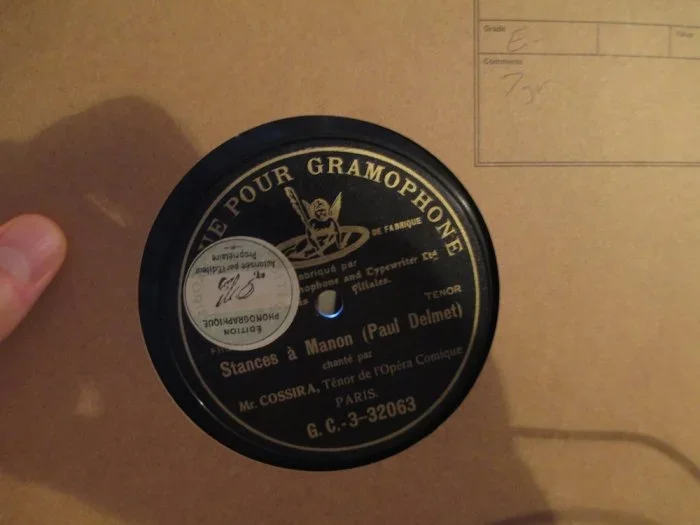
Emile Cossira: Stances À Manon

One of the best opera songs I have from 1904. So rare never uploaded to internet. :facepalm2:

cossira.webp
 
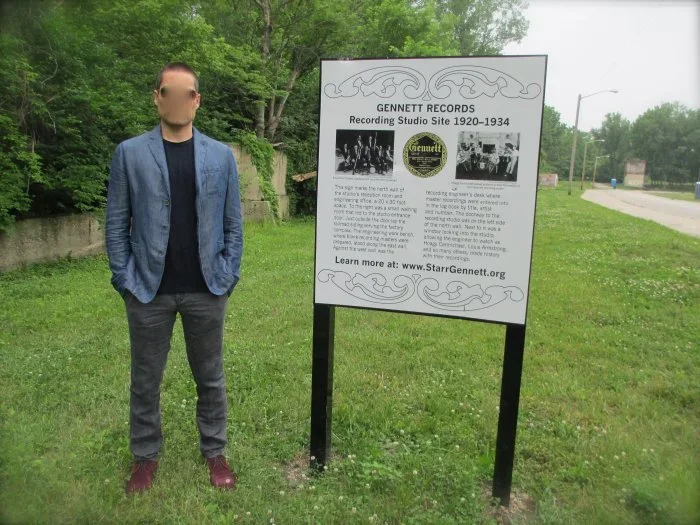
Just bought a disc deaf for 60 euros by an obscure Italian opera singer Giovanni Borracelli performing a Spanish folk song recorded in the location below (pic taken years ago before before I knew what I was doing with clothes).

gennettstudio2.webp
 
Just bought a disc deaf for 60 euros by an obscure Italian opera singer Giovanni Borracelli performing a Spanish folk song recorded in the location below (pic taken years ago before before I knew what I was doing with clothes).

View attachment 7834

I was about to call you out for the Northern Sonny Crockett look, but you inoculated yourself.

Curious, are original recording plates still in existence for this type of music?
 
I was about to call you out for the Northern Sonny Crockett look, but you inoculated yourself.

Curious, are original recording plates still in existence for this type of music?

Some of the original plates from Paramount (not related to movie company) recorded in Grafton Wisconsin still exist. I just checked my copy of The Frog Blues & Jazz Annual No 1: Musicians, Records, Music of the 78 Frog Records: Jazz/Blues music which says 45 metal Paramount mothers including three by Skip James still exist in the non-public vaults of Regenstein Library at University of Chicago.

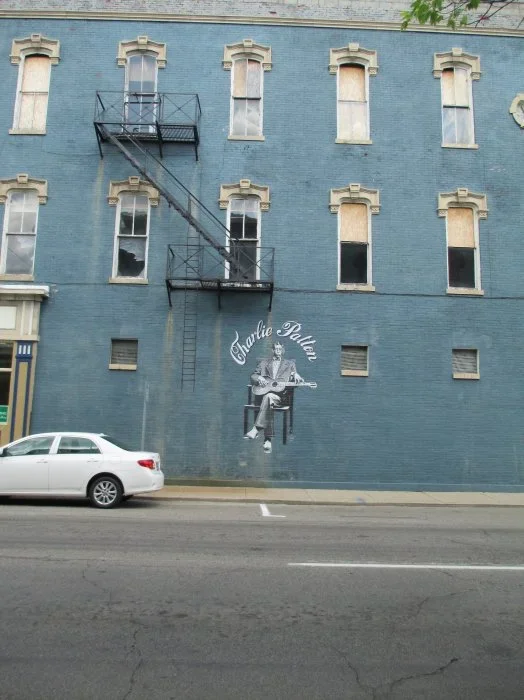
I should remember if anything remains of Gennett, as my American side of the family still lives in the same town of Richmond, there were no public memorial markers there when I was kid like there is today:

IMG_00722.webp

But pretty sure nothing is left there, most masters were recycled as scrap during WWII.

Even if you wanted to repress a new 78 off the original mothers the shellac formulations and pressing machines don't exist anymore. You could repress on vinyl but it wouldn't sound as good.
 
Some of the original plates from Paramount (not related to movie company) recorded in Grafton Wisconsin still exist. I just checked my copy of The Frog Blues & Jazz Annual No 1: Musicians, Records, Music of the 78 Frog Records: Jazz/Blues music which says 45 metal Paramount mothers including three by Skip James still exist in the non-public vaults of Regenstein Library at University of Chicago.

I should remember if anything remains of Gennett, as my American side of the family still lives in the same town of Richmond, there were no public memorial markers there when I was kid like there is today:

View attachment 7838

But pretty sure nothing is left there, most masters were recycled as scrap during WWII.

Even if you wanted to repress a new 78 off the original mothers the shellac formulations and pressing machines don't exist anymore. You could repress on vinyl but it wouldn't sound as good.

Yeah, that's where I was headed, the entire chain of technology appears to have disappeared. Wonder if 3D printing might one day save the day.


Perfect for a lazy Sunday afternoon with the sun creeping in through the blinds..
 
Sad but pleasant memories.
Mark on Fiddle in Hat and some of the others were /are mates of mine.

Last I spoke to Mark was at a birthday gig they played 2 years ago. I spoke to him for more than hour or two up next to the bar. We shared a few cigarettes and a few joints and a few beers. We talked about his health problems. He went home at 1.30 am. At 8.30 am he was taken to hospital. Never woke from coma. They pulled the plug 3 days later.

He liked good clothes too.
One of the only other few blokes I know personally who owned a linen suit.
 
Heroin will do that to you
well no.
If it was legal and just heroin and you ate right and didn't smoke cigarettes and drink too much - then nothing much would go wrong - except constipation - you can manage that easily enough.
 
Change the name on the first post of the thread from Harvey's to yours.
I don't mind but I still don't know the implications. I don't want to be held responsible for arnathor and thruth posting innumerable clips of Bachman Turner Overdrive's Greatest Hit.


They play this at the club quite a bit...I'm usually brooding over an old fashioned.
 
The case for extreme metal
Catherine Strong Associate Lecturer,
Music Industry at RMIT University. Melbourne
Australia https://theconversation.com/the-case-for-extreme-metal-45770

For many people, their knowledge of extreme metal mainly springs from the activities of a small group of Norwegian black metal musicians in the 1990s.

In 1993, Varg Vikernes from the band Burzum was convicted of the stabbing murder of Euronymous, guitarist from rival band Mayhem.

Various other musicians associated with the scene were also implicated in murders, assaults and rapes, while others committed suicide. And, most notoriously of all, black metal musicians were involved in – and openly encouraged – the burning of churches, up to 20 of which were torched between 1992 and 1996. In terms of musicians walking it like they talked it, these were unprecedented acts, unmatched before or since.
Burzum – Dunkelheit.

It’s hardly surprising that extreme metal has found it hard to shake off the shadow of Vikernes and his peers, not only because of the continued discussion of the events in popular culture (a movie about the era directed by Jonas Åkerlund is due to start production soon).

Mayhem – Deathcrush.

Metal is already a hard sell for most people, given that it is a genre that likes to push boundaries. As the name suggests, in extreme metal, taking something as far as possible, further than before, whether sonically, lyrically or visually, is what musicians aspire to. Given that this can mean confronting some of society’s taboos head-on, extreme metal can seem threatening and frightening.

Under the hood
“Extreme” metal is a blanket term that captures a number of subgenres (death metal, doom metal, black metal and so on; the subgenres of metal are always evolving and expanding).

Morbid Angel – Immortal Rites.

These began to emerge in the 1980s, generally as an extension of the thrash metal sound associated with bands such as Slayer, Metallica and Anthrax. Morbid Angel, Obituary, Cannibal Corpse and in Australia bands such as Armoured Angel, started to push the musical boundaries established by earlier metal artists.

To the uninitiated, extreme metal can be an impenetrable wall of guitar-based noise, at times with tempos that are at breakneck speed, or slowed to the point of almost inertia (a feature of doom metal bands such as Sunn O))).

Cannibal Corpse – Sentenced To Burn.

A particularly striking feature of the genre is the way vocals are often not sung or shouted, but growled in a deep, guttural tone (in death metal), or shrieked (in black metal), in a way that makes distinguishing the lyrics almost impossible.

For those who go to the effort to engage with the lyrics, they will find that the songs deal with a wide range of topics but often delve into taboo subject areas. Obviously, death and the occult are popular themes, and these are explored in great detail (see, for instance, the artwork and lyrics of Cannibal Corpse for some graphic work along these lines).
Armoured Angel – Enigmatize.

Some extreme metal bands also write about sexual taboos, including necrophilia, paedophilia and rape. In a rare instance of musical censorship in Australia, Tasmanian bandIntense Hammer Rage had their albums seized by Customs, and were fined, because of the sexually explicit nature of their lyrics.

Underground, and out of mind
On the whole, though, and perhaps surprisingly, the activities of extreme metal scenes have been left unscrutinised by mainstream society. The fact that it has not more often been the subject of moral panic is almost certainly down to its still-underground nature, and the fact that it can be sort of hard to work out what is going on with it.

The fact that it has managed to evade scrutiny for the most part is a good thing, given that – the activities of a handful of Scandinavian extremists notwithstanding – there is no compelling evidence that extreme metal fans or musicians are more likely to be violent, destructive or anti-social than the general population.
Sunn O))) – Alice.


The Norwegian black metal crimes captured people’s imagination because they show the relationship between the culture people consume and their actions playing out in the way common sense often suggests to us it should – that if we listen to music about violence, for instance, we will be more likely to become violent.

But the relationship between culture and individual action is much more complex than this, and there is plenty to suggest that the opposite may be the case in many ways.
Obituary – Slowly We Rot.


Prominent metal scholar Keith Kahn-Harris has suggested that the way extreme metal pushes boundaries and explores taboos opens up transgressive spaces that are otherwise hard to come by in modern Western culture.

These are places for people to explore forbidden themes and consider what they mean in a society that shuns and discourages the exploration of the darker side of life. Extreme metal provides a place for its adherents to step outside of the everyday, while also creating global and local communities to support the creation and distribution of this unconventional music.

While extreme metal scenes are not without their problems (female and non-white musicians are still few and far between, for instance) they encourage inventiveness in finding ways to go that bit further, to break that next limit.
 
Last edited:

Users who are viewing this thread

Back
Top Bottom