
- Messages
- 9,933
Follow along with the video below to see how to install our site as a web app on your home screen.
Note: This feature may not be available in some browsers.

 OfficePants
and
OfficePants
and
 Russell Street
Bromwich responded with a draft letter outlining how he planned to carry out his job, with information on what he needed from Apple (interviews with top personnel, reviews of company records) and how he planned to be reimbursed ($1,100 per hour for himself and $1,025 per hour for Nigro’s assistance, plus a 15 percent administrative fee). The judge on the case provided for Bromwich to set the fees "at the cost and expense of Apple," as long they were of "reasonable and customary terms" and approved by the Justice Department. If Apple objected, they could come back to the judge.

I see that Bromwich is a good guy that pointed out that the FBI were inept liars. Apple, obviously, is pure evil.He kept the lead forensic scientist at the FBI from testifying at the Oklahoma City Bombing trial after, he says, it became clear he "didn’t know what he was talking about."
Interesting article about the battle over Apple's monitoring:
How Apple's court-appointed monitor became Cupertino's most wanted | The Verge
This tidbit will please both

Not the NDP!!!!! Noooooooooooooooooooooooooooooooooo
How are employees too lazy or ignorant to report this? A few years ago, I did Get Out the Vote canvassing for a political campaign, and when the promised checks didn't arrive, several polite reminders were made. Then somebody made a mention of notifying the state's Wage and Hour Division and suddenly everybody got paid. Supposedly this is a department that is second only to the IRS in striking fear into hearts with their punitive zealousness.
Did you read the article?How are employees too lazy or ignorant to report this? A few years ago, I did Get Out the Vote canvassing for a political campaign, and when the promised checks didn't arrive, several polite reminders were made. Then somebody made a mention of notifying the Wage and Hour Division and suddenly everybody got paid. Supposedly this is a department that is second only to the IRS in striking fear into hearts with their punitive zealousness.
Yes. These people are retarded. Complain to government bureaucrats and the employer will be scrutinized under a microscope forever. Abuses will end.Did you read the article?
Did I miss it in the article, or were they omitting obvious answers that didn't fit a preconception?It's amazing to me how you've come up with this heretofore unthought of solution. Bravo, sir. Bravo.
Did I miss it in the article, or were they omitting obvious answers that didn't fit a preconception?
Why did they focus on roundabout after-the-fact metrics involving civil suits? Perhaps because that was how favorable statistics could be found?
The old adage is that possession is 9/10 of the law. If you punched a time card, collected a check, and signed it...that evidence tells a tale. If the employee was complicit in covering up legal violations, the tale is a lie and you have no case.
If there's a case of some company actually giving out paychecks telling a story of wage theft, please let me know.


He isn't a normal rock star, so adulation wouldn't get you anywhere. A Sydney fan found that out when she got the chance to meet him in 2002.
"Thank you for everything," she gushed. "You’ve made me and so many people so happy."
"I didn't mean to," the grumpy rock star fired back.

That indeed is the question.............. but if anyone likes Morrissey and his music, ..
That indeed is the question...........
I skimmed this. I missed the scary part. I caught the editorial bias at the end that disapproving of lesbos or trannies is baaaad. This vast movement has two cases of criminality associated with it! Unlike the homos and trannies, who are all wonderful human beings.
Universities in America are investment portfolios. Actual schooling is a very secondary or tertiary function.
I would have to say the article explains it: he's got the mopey brooding thing down pat. Only Peter Steele could do it as well.Yeah, I never understood the fascination with this guy. Seems there were 100 others just like him at the time.
I would have to say the article explains it: he's got the mopey brooding thing down pat. Only Peter Steele could do it as well.
 Journeyman
 fxh
fxh
What’s the best way for women decrease their chances of cancer AND venereal disease?
Doctors have discovered that the seed of the man is an alien substance to the woman. It triggered responses similar to those of an “allergic” reaction. A woman who has a husband is able to develop “immunity” to this reaction; however, a promiscuous woman’s immune system becomes confused and unable to distinguish alien substances. This confusion is a key to the development of cancer.

Interesting piece on wild Alaskan salmon and how the majority are actually hatchery bred:
Wild salmon may not be as wild as you think | The Verge
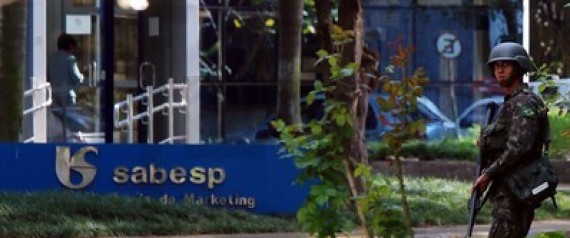

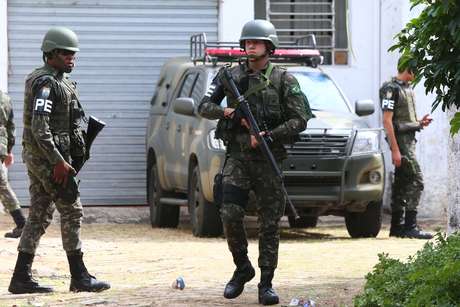

Action of the Critical Infrastructure Protection Southeast Military Command (CMSE) on Wednesday morning (27MAIO 2015)
A huge contingent of military and armed police forces, particularly the Army, is being prepared for interventions in the area of Greater São Paulo, which encompasses 39 municipalities and a population of over 20 million people. This huge population concentration could be without water in the coming months. Fearing an uprising only compared to the Constitutionalist Revolution of 1932, the state government and the federal government are organizing to contain a possible civil uprising.
This is the scenario expected by the authorities and pre-announced by Defesanet, exclusively, in November last year. At that time, back in October 2014, the state government had already sent its military police force for SWAT training, special tactical group that specializes in response to large demonstrations in the United States. At the time it was said:
"The government of the State of São Paulo is preparing for possible protests in the state capital due to lack of water. Military Police Intelligence Units of São Paulo (PM/SP), are working specifically with the possibility of serious social upheavals which require police intervention. Earlier this month members of the government's public safety top management were in the United States, receiving SWAT instructions, because there is still the fear of infiltrating extremist actions in possible class actions ".
The situation has evolved coming to the conclusion that besides the manifestations can take the character of armed revolution, creating utter chaos, the supply reservoirs are seriously compromised either by pollution or lack of water. That could be the desertification process already announced by scientists studying climate change resulting from global warming.
Summer rainfall was about 15% below the average for the rainy season in the Southeast. In addition to changes in Amazon climate, the constant environmental assaults and moisture transport blockage to the Southeast and Midwest of the country, there is the constant rise of oceanic barriers to the entry of cold fronts that generate rainfall, due to abnormal heating the sea surface temperature (SST). (... similar to the RRR off California)
The Southeast, South and Midwest regions of Brazil are in the range of the great deserts of the southern hemisphere of the planet like the Atacama, Namib, Kalahari and the three existing in Australia. This region could only survive as a fertile area due to the Atlantic Forest, now reduced to 7% of its original size, and moisture transport of the Amazon rainforest.
Last year, the scientific community had already indicated this. One of the most important scientists in meteorology in the country, Paulo Nobre, INPE, fears the worsening of this situation. "A water supply collapse is a public safety issue, major changes were preceded by climate change as history shows us the French revolution and the next Russian revolution," he noted.
There is also the real possibility of large migration flows to regions where there are still water, like the Paraíba Valley, which is the closest region of greater Sao Paulo. This would lead to exhaustion not only natural resources, but also very serious conflicts over the ownership of water and land, including private property. Disturbances are expected within a real scenario of conflict over water throughout São Paulo State and may trigger similar actions in Rio de Janeiro, Minas Gerais and Mato Grosso do Sul.
On Wednesday morning (27 MAIO 2015), military groups in Southeast Military Command (CMSE), conducted a Critical Infrastructure Protection exercise at the premises of SABESP, the company responsible for water supply São Paulo, located in Pinheiros neighborhood, São Paulo capital.
São Paulo has been studied from various public safety angles. How to maintain order in a city flowing in a stressful environment? The experience of the 2006 riots (Carandiru massacre) have not yet been fully analyzed.
The municipal election campaign in 2016, rising crime, disorder caused by the economic crisis and unemployment evolving lead to a critical brew in capital letters.
See also: There Will Be Blood! Water shortage becomes public security issue in São Paulo
Rules of Engagement for Favela Occupations Must be Reconsidered
The Brazilian Armed Forces have cut down monthly drug traffic profits in Rio de Janeiro’s Maré Complex from $15 million Brazilian reals to $300,000 reals since the beginning of the occupation. This loss has been a cause for great concern to the leaders of the three main factions of Rio’s organized crime. Back in February, a lookout made $700 reals a week, but today they barely make any money. Regardless, the situation is still far from being resolved, and the Military is not to blame.
The majority of society believes that organized crime in the favelas is carried out by rifle-toting drug dealers who sell drugs. That's just the tip of the iceberg of a network that hides thousands of unarmed people, living directly or indirectly off the drug income, in these communities.
This makes it essential for the State to understand the economic impact that cutting-off drug traffic will cause before there is a military occupation of this magnitude, and offer alternatives to the people. This did not happen when the Armed Forces left the Alemão Complex and the situation returned to critical levels, compromising the credibility of the process.
Maré residents notice that, and they know that the presence of the Armed Forces is temporary; to illustrate this point, a community leader who strongly supported the Troops in Maré did not have his safety guaranteed and was murdered in late 2014.
In Favela Haiti, the Brazilian Battalion controled the situation because it had carte blanche to enter every house and shoot down anyone who is carrying a gun. Operationally, this is the only way to ensure the Troops the same degree of freedom that organized crime has to go into every home, which they do by terrorizing the community.
The political decision not to grant these same rights to the Troops in Maré has caused unnecessary attrition to the Service Members committed to the mission’s fulfillment. Everyone knows that the Military occupation of the Maré Complex was due to the World Cup and, if it is up to the politicians, it will continue until the Olympics.
Amid water crisis, Army occupies Sabesp headquarters to carry out training in SP
... Employees of Sabesp heard by GLOBO this afternoon said they had witnessed Army men doing similar exercises at the company headquarters at least three other times in the last two months ...
According to a Sabesp technician, who worked for 19 years in the company and did not want to be identified, said employees who work on the street have already been threatened in neighborhoods that are without water and Sabesp managers are using unmarked vehicles: "The Army is already studying the area in case we have a social upheaval. Imagine if the population decides to invade Sabesp? This building controls the water supply to the entire city. It's like that red button that appears in the movies: press it and everyone is without water."
According to 2nd Military Command Southeast, the exercise ("Exercise Anhanguera") is part of the routine Brazilian Army Military Training Program and has no relation to the current water crisis.
Brazil's Strategic Project Proteger will Secure Important Infrastructure
The Strategic Project Proteger [Protect] , an initiative launched by the Brazilian Army in 2012, guards the country's hydroelectricity, energy delivery networks, refineries, airports, and sea facilities, all of which are essential to the country's development and economic well-being.
The effort prioritizes the protection of 664 strategic ground structures - facilities, assets, services, and systems whose interruption or destruction would have a severe, adverse impact on the government and society. “Structures such as these already have their own security, but if that should fail, the Army must be ready to act,” said Lieutenant General William José Soares, the initiative's project manager.
Those structures include facilities responsible for generating 56 percent of the electrical power in the country, with more than 100,000 kilometers of power lines.
Security officials created the Interagency Ground Operations Coordination System (SISCOTI, for its Portuguese acronym), which will consist of a total of 19 units individually called Interagency Ground Operations Coordination Centers (CCOTI). The primary CCOTI will be deployed in the capital, Brasília. The other centers will work together as Military units deployed throughout Brazil.
 LelandJ
doing the lords work undermining my Brazil thread.
LelandJ
doing the lords work undermining my Brazil thread.
Capitalism, near as I can tell, involves a lot of companies trying to get as much out of a worker as they can for as little pay as possible.

Why hardly anyone dies from a drug overdose in Portugal - The Washington Post
Why hardly anyone dies from a drug overdose in Portugal
decriminalized the use of all drugs in 2001. Weed, cocaine, heroin, you name it -- Portugal decided to treat possession and use of small quantities of these drugs as a public health issue, not a criminal one. The drugs were still illegal, of course. But now getting caught with them meant a small fine and maybe a referral to a treatment program -- not jail time and a criminal record.
Whenever we debate similar measures in the U.S. -- marijuana decriminalization, for instance -- many drug-policy makers predict dire consequences. “If you make any attractive commodity available at lower cost, you will have more users," former Office of National Drug Control Policy deputy director Thomas McLellan once said of Portugal's policies. Joseph Califano, founder of the Center for Addiction and Substance Abuse at Columbia University, once warned that decriminalization would "increase illegal drug availability and use among our children."
But in Portugal, the numbers paint a different story. The prevalence of past-year and past-month drug use among young adults has fallen since 2001, according to statistics compiled by the Transform Drug Policy Foundation, which advocates on behalf of ending the war on drugs. Overall adult use is down slightly too. And new HIV cases among drug users are way down.
Now, numbers just released from the European Monitoring Centre for Drugs and Drug Addiction paint an even more vivid picture of life under decriminalization: drug overdose deaths in Portugal are the second-lowest in the European Union.
Among Portuguese adults, there are 3 drug overdose deaths for every 1,000,000 citizens. Comparable numbers in other countries range from 10.2 per million in the Netherlands to 44.6 per million in the U.K., all the way up to 126.8 per million in Estonia. The E.U. average is 17.3 per million.
Perhaps more significantly, the report notes that the use of "legal highs" -- like so-called "synthetic" marijuana, "bath salts" and the like -- is lower in Portugal than in any of the other countries for which reliable data exists. This makes a lot of intuitive sense: why bother with fake weed or dangerous designer drugs when you can get the real stuff? This is arguably a positive development for public health in the sense that many of the designer drugs that people develop to skirt existing drug laws have terrible and often deadly side effects.
Drug use and drug deaths are complicated phenomena. They have many underlying causes. Portugal's low death rate can't be attributable solely to decriminalization. As Dr. Joao Goulao, the architect of the country's decriminalization policy, has said, "it's very difficult to identify a causal link between decriminalization by itself and the positive tendencies we have seen."
Still, it's very clear that decriminalization hasn't had the severe consequences that its opponents predicted. As the Transform Drug Policy Institute says in its analysis of Portugal's drug laws, "The reality is that Portugal’s drug situation has improved significantly in several key areas. Most notably, HIV infections and drug-related deaths have decreased, while the dramatic rise in use feared by some has failed to materialise."
As state legislatures debate with issues like marijuana legalization and decriminalization in the coming years, Portugal's 15-year experience may be informative.
You always have the best takeaways from these articlesWhoa, Estonia has some work to do.