
- Messages
- 22,332
Haterz
Helperz, not enablerz
Follow along with the video below to see how to install our site as a web app on your home screen.
Note: This feature may not be available in some browsers.
Haterz
... really cut the mustard when compared to English shoemakers or US ones.

What have you done with Our Pauly -?

pls tell me, when does this urban myth ever stop? while I received the trademark of shilling on this forum, I'm honestly an inquiring mind on cutting the mustard workshops, not? where can they be found?

pls tell me, when does this urban myth ever stop? while I received the trademark of shilling on this forum, I'm honestly an inquiring mind on cutting the mustard workshops, not? where can they be found?
What urban myth is that?
Always playing the victim. This has been explained to you several times : No one ever called you a shill. You were called out for using the services of a known shill GUS, to get your little Maftei sh00 business off the ground. How's that biz going by the way? Any new potential clients/victims?
seriously, what is this nonsense again??? who used the service of #guswalbolt? not me, sorry. poor research again and again, ololo
actually and not even virtually is the maftei shoe business in my possession. wtf. not sure whats your motivation to blow hot air, when you know absolutely nothing. please tell me? no, please don't. just stfu. much appreciated.
nevertheless, #guswalbolt is a tool. thats for sure, period.
ps: pls perform a duet "me and my monkey" and call it a day, ololo
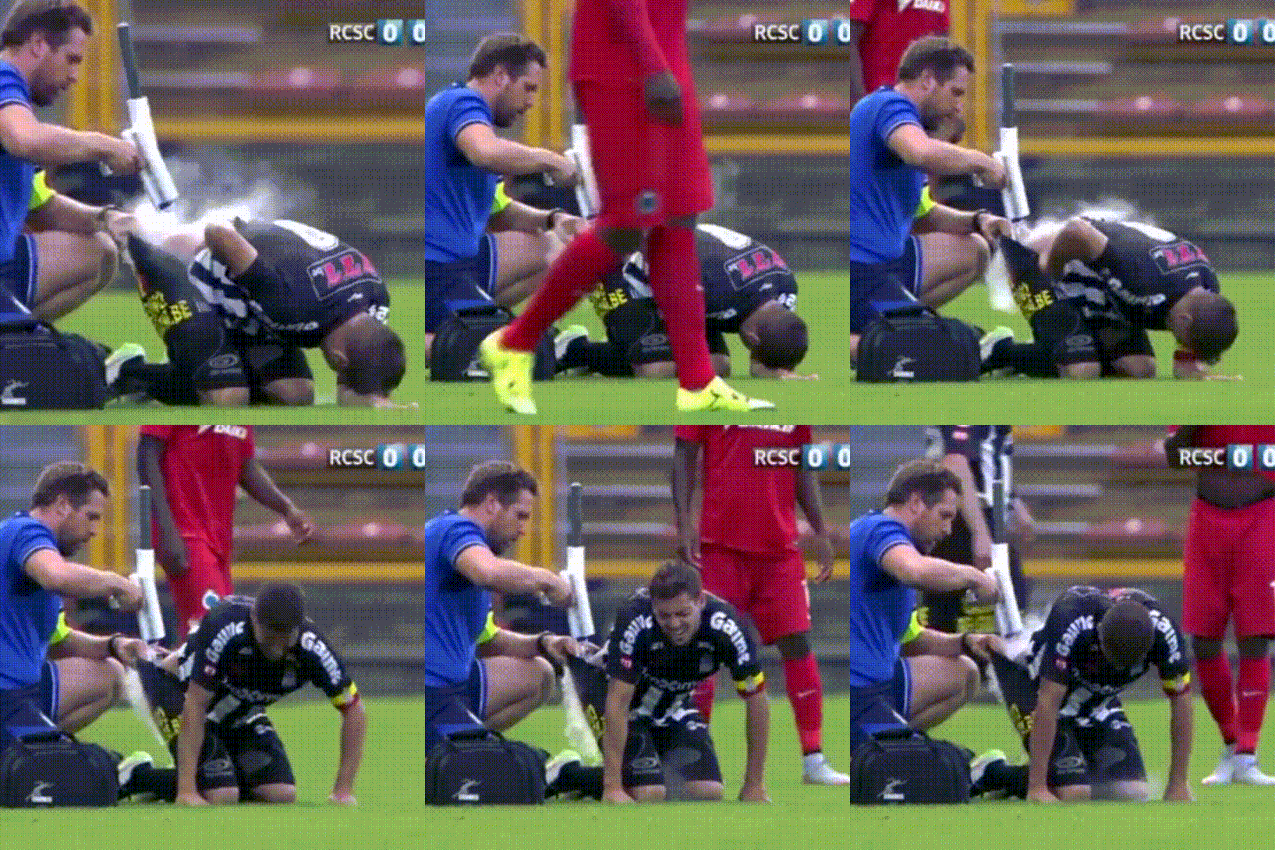

He fell on his backside and bruised himself, most probably.Hey, what's he doing to the bloke's backside, and why is he doing it?
He fell on his backside and bruised himself, most probably.
Yes, but why is that other bloke blowing smoke (ice fumes) up his backside, what is this supposed to do, cool it off and relieve the pain?
btw, I have never seen these types of things before, hence the questions. Quite an unusual activity. And yes, the man does appear to be in pain.

It's the standard treatment for chronic butthurt.Yes, but why is that other bloke blowing smoke (ice fumes) up his backside, what is this supposed to do, cool it off and relieve the pain?
btw, I have never seen these types of things before, hence the questions. Quite an unusual activity. And yes, the man does appear to be in pain.
please be assured that when maftei shoos finally do show up at some new shitty igent affiliate made for instagram vendor designed to exploit sorry SF bros your fat greasy bratwurst eating fingerprints will be all over it.


You sure about the gypsy part? Because of the penchant for "pre-loved" clothes? Usually they don't get that fat. Also skin is far more Nafri than anything else.actually, I'm not afraid of unwanted kids from gypsy hoes, anyway.
pls be assured, that I'm not afraid of dumme schweine oder andere parasiten. sorry, for not having bratwurst fingers.
... du kannst gerne meinen arsch lecken, I just don't
You sure about the gypsy part? Because of the penchant for "pre-loved" clothes? Usually they don't get that fat. Also skin is far more Nafri than anything else.
HeyThe Shooman
John Karandonis on reviving the lost art of shoemaking
Mark Dapin
John Karandonis survived the fascist occupation of Crete before emigrating to Australia, where he made his name as a shoemaker to the stars. And while our once-thriving footwear industry has all but disappeared, he remains hopeful that, with his knowledge, he can give it a kick along.
John Karandonis, once Australia's most famous shoemaker, grew up without shoes in Nazi-occupied Crete. Karandonis is now a silver-haired old man, but his eyes shine – his pupils seem literally to glow – when he speaks of the lost craft of the cordwainer.
The struggling Australian footwear industry, which once employed more than 20,000 workers, all but disappeared when import tariffs were lifted in the 1980s. TAFE colleges closed their courses, factories bolted their gates. The machinery of shoemaking – all the deliciously named skivers, insolers and welters – was auctioned off, melted down or shipped to Asia. All that remained were the makers themselves, and they, too, are vanishing into memory.
Glynis Jones, fashion and dress curator at Sydney's Powerhouse Museum, says Karandonis's shoemaking was close to art. "An artist has to really know his or her colours, to know his materials, to know his techniques," she says. "A handmade shoe takes a lot of skill and a really good eye: you're looking at the grain of the leather and the stretch of it, and how it will work across the top. [Karandonis] was very interested to hide seams, so he was thinking of how to make that really smooth line, and you have to work and work and work the leather to remove all the wrinkles."
The art of the shoe
John Karandonis at the School of Footwear in Leichhardt reflects on his years as a shoemaker.
Like an artist, Karandonis laboured to make objects that were beautiful in themselves, but his shoes were also known for their comfort. Three Australian PMs wore Karandonis shoes, and Karandonis received a Medal of the Order of Australia (OAM) for services to the footwear industry. Now he fears his skills and knowledge might be lost so, once a week, he travels from his home in Sydney's Fairlight across town to inner-west Leichhardt to the small, privately run School of Footwear, where he answers questions from students – most of them hobbyists – keen to learn the 200-odd processes that go into the creation of a handmade shoe.
There is no air-conditioning in the School of Footwear, a shopfront on the furiously busy Parramatta Road. It feels a little like factory heat in the workshop room where Karandonis sits at a bench, facing a row of old shoemaking machines. I go to sit down, but it turns out I have chosen an antique polishers' chair, with a centrally hinged seat that opens into a compartment to store brushes and polish. The chair rolls on timber castors, which apparently means it could be more than 100 years old. I move to an ordinary seat instead.

John Karandonis at the School of Footwear. Photo: Louie Douvis
Flanked on two sides by faintly eerie-looking lasts, foot-shaped casts piled like disembodied appendages in wall-mounted cases, Karandonis tells his story in a tired voice belied by those dark, twinkling eyes. He was born in Iraklion near Knossos, Crete, in 1933, the son of refugees from Turkey. His father had a small farm growing grapes and roses, but there was not enough land to support a family with seven children, so his father also worked as a labourer on other properties.
When John was seven years old, the Italians invaded Greece from the west. They were beaten back by the Greek army, but then Germany and Bulgaria invaded from the east. Crete was the last part of Greece to fall to the Axis powers, in June 1941.
Karandonis grew up in a nation under fascist occupation. It was a terrifying time to be young and powerless. "You start seeing dead bodies," he says. "Every step you make, you think – even as a child – that somebody will shoot you. Then we had accidents with hand grenades. Sometimes the Germans put all their spare clothes in a pile and set them on fire and – so we wouldn't take them – they'd put in bullets. In the heat, they'd just bang."
The Cretans faced starvation. Karandonis recalls "trying to exchange things – like, we'd have some chickens and eggs – we'd take them and try to give eggs to the Germans and the Germans would give me bread, sardines. Many times I went without shoes in the war. In the very cold or sometimes snow, I didn't have shoes. My mother used to make sandals from motor car tyres."
His parents became friendly with two leaders of the Communist Party who were fighting with the resistance. "We used to live in a very, very small village," he says, "and partisans used to come from the mountains and meet the families, and it was nice."
The Cretan tragedy continued in the 1946-49 Greek Civil War that followed the defeat of the Axis powers. Karandonis's family friends were hunted by right-wing forces. "As they were communists and they were not from Crete, the local people killed them," he says. "That was frightening, because I saw one of them killed. The Cretans had him in a truck and they were taking him around to show off to other people that they'd caught him and killed him. And I was coming from Iraklion, walking home – to see that."
For a moment, Karandonis is subdued. He remembers a lot, but he would prefer to think about shoemaking. The shoemakers of Crete were the best in Greece, and Karandonis began a seven-year apprenticeship at the age of 13, in 1946. Back then, he says, it used to take four people on a square table one whole day to make two pairs of shoes.
He won a gold medal for his women's shoes at the International Footwear Show in Salonika in 1950. "When I was a boy," he says, "I always had dreams to go further and further. So from Crete I moved to Athens. I brought over my family. Then I left them there to come to Australia."
The footwear industry is a past industry. It’s lost. When I die, all my knowledge will go with me.
He smiles. His sentences often seem blunt and his syntax suggests he is still translating from Greek, but there is always a warmth to his words. He arrived in Australia in 1960, and his brother eventually followed him. In the new country, Karandonis found a thriving shoemaking industry which, by the late 1960s, involved 21,183 workers, two-thirds of them women, in 212 factories and workshops.
"I thought there were not many shoemakers," he says. "They were machine operators. There was a lot of machinery, machines which I'd never seen. In Greece, everything was by hand. I knew everything about shoemaking, from A to omega."
Karandonis joined the Packard Shoe Company as a designer in 1961. He was quickly successful. "I had the willingness to teach," he says, "and for me it was very easy to help people adopt what I liked."
Today Karandonis walks uncertainly, but he was an accomplished dancer in his youth. He used to follow a Filipino dance troupe who performed every week at a Chinese restaurant in Manly. It was here that he met Kaye, a dress designer who was teaching at East Sydney Technical College and moonlighting at the restaurant to save money to go to Greece and study the history of costume. Karandonis left the Packard company in 1966 and married Kaye in 1968.
When he first went out on his own, Karandonis sold his shoes door to door from a suitcase. He describes himself as an "inventor" of shoes. His first patent applied to an upper-cast moccasin with minimal layers, minimal stitching and no rigid insole. He is wearing a pair of Karandonis moccasins today. To demonstrate their flexibility, he takes off a shoe and bends it so that the toe touches the vamp.
It was the moccasins that made the Karandonis name. Sale of the Century host Tony Barber did the most to popularise them: at the end of every show the credits rolled with the legend "Shoes by John Karandonis". Then came the PMs: Billy McMahon, Gough Whitlam and Malcolm Fraser. Karandonis says he knew the Whitlams "very well" and made shoes for both Gough and Margaret.
McMahon was famously shorter than his glamorous wife, Sonia. "He used to come to the factory," says Karandonis, "and one day he said, 'Make me shoes and build up the heels to match bloody Sonia.' I could make it a little higher [than Sonia] but at least as tall."
Among celebrities, as Karandonis remembers it, "There was nobody not wearing Karandonis shoes." Customers tended to be loyal. Advertorial pioneer Bernard King bought 15 pairs. Karandonis's slogan was, "You buy your first pair for what you believe they are … and your second, third and fourth pair etc … for what you know they are."
Glynis Jones at the Powerhouse says Karandonis was "creating a beautiful-quality product for a person who expected their shoes to last a long time, and wanted a stylish shoe that wasn't too 'fashion forward'."
Karandonis had a factory in inner-Sydney Marrickville which made about 100,000 shoes per year, but the industry was already disappearing around him. By 1977, there were only 12,221 workers in 126 factories. Australian footwear manufacturers had seen their profits fall for many reasons – not least the advent of equal pay for women – but their businesses remained ferociously protected. The cost to consumers was estimated at $125 million per annum, which easily exceeded the total of all wages and salaries paid to footwear workers.
When tariffs were peeled away, Karandonis was not badly hit, as his products were not in the same market as cheaper imported shoes. "One of his great concerns was that the shoes be comfortable and have a very elegant line about them," says Jones, "So he always had a clientele who were looking for that kind of shoe, and there were not that many people in the Australian industry who would be producing that quality."
Karandonis watched fashions come and go, sometimes quizzically. In the 1970s, he worried that platform soles were dangerous as men could fall off them. In the early 1980s, Karandonis became an offshoring pioneer. "I thought it was about time to retire," he says, "and I had an offer from a Chinese company to go to China to make Karandonis shoes. We went with a state government partner, we had a good factory. I selected workers.
"The idea was that having cheap labour you could make even better shoes, because you can spend time to do all the little things. But the Chinese man had different ideas. He thought the shoes should last one to two years, then they had to throw them away and buy a new pair."
The Chinese wanted to use synthetic insoles instead of leather. "It was a stupid thing to do," says Karandonis. He spent more than a year living in the city of Shantou in Guangdong province, but came home disillusioned in 1983, and started making shoes in Australia again, this time under the El Greco brand.
Darren Bischoff, the owner of the School of Footwear, remembers studying Karandonis shoes in college. Bischoff was one of the last footwear apprentices to take his trade qualifications at Ultimo TAFE in Sydney. "I started there in 1988, the year [then federal Labor industry minister John] Button lifted tariff duties and taxes on footwear in Australia," he says. "So the year I started was the year it started closing up." As Bischoff completed his TAFE classes, they were deleted from the curriculum.

Karandonis began his shoemaking apprenticeship at age 13 in Crete. When he arrived in Australia decades later, 'I had the willingness to teach,' he says. Photo: Louie Douvis
Karandonis began his shoemaking apprenticeship at age 13 in Crete. When he arrived in Australia decades later, "I had the willingness to teach," he says. Photo: Louie Douvis
There was little scope for Bischoff to find work in the industry. He makes bespoke shoes for private clients, art shoes, and footwear for stage shows including Opera Australia's current production of Madama Butterfly, and he teaches at his school. He says craft shoemaking is a growing hobby in Europe, and it is gradually becoming more popular here.
This afternoon, Karandonis is going to demonstrate to students how to use Bischoff's superannuated welting machine. Bischoff shares Karandonis's love for the arcane of the trade. He calls his appliances "beautiful machines". It can take all day to hand-welt a shoe, but a welting machine can do the job in seconds.
"It's taken me years even to find somebody to maintain and repair this machine," says Bischoff. "I bought it from an old shoe man in King Street, Newtown. I bought several of the machines because he said all of them worked. And none of them worked. It's taken me six years and we're still fixing."
It is not easy trying to maintain any kind of footwear business in Australia. A shoemaker needs a knife-maker. Bischoff says there is only one knife-maker left in Sydney, and he is planning retirement. Every shoe requires its own last. There is only one last maker left in Australia, and he owns the last last-making machine (his pun, probably intended). Small parts are difficult to come by. Overseas companies will happily supply 1000 buckles, for example, but Bischoff only needs 10 at a time.
Bischoff sources his heavy equipment at auctions, and he met Karandonis when Karandonis was selling off the contents of the El Greco factory. There are a couple of machines from El Greco in the School of Footwear, including an eyelet press. Karandonis looks upon them all with great affection.
Does he miss the shoemaking industry?
"Very much so," he says.
But he is happy to help out at the School of Footwear.
"I love to teach people," says Karandonis.
"The footwear industry is a past industry. It's lost. When I die, all my knowledge will go with me.
So what's the point? "Here, I answer anything I can. I'm going to pass on anything I know."
Hey
+
What an excellent article fxh. I'll have to try and catch up with John Karandonis in Paramatta when l see my shirt maker. John was a huge name in the 1980's, and all the stars wore his shoes, and his publicity on t.v was ever present for many years,all the hosts like Bert Newton and game show hosts wore his shoos. I aspired to own his shoos in the 70's and 80's but l never had the money as a young bloke. He made a nice middle class shoo.
I recall he made glued and stitched shoos. He also specially made for AMWAY:
https://www.gumtree.com.au/s-ad/yok...d-made-shoes-never-worn-size-6-1-2/1073002635
I loved this quote:
I had an offer from a Chinese company to go to China to make Karandonis shoes. We went with a state government partner, we had a good factory. I selected workers.
"The idea was that having cheap labour you could make even better shoes, because you can spend time to do all the little things. But the Chinese man had different ideas. He thought the shoes should last one to two years, then they had to throw them away and buy a new pair." The Chinese wanted to use synthetic insoles instead of leather. "It was a stupid thing to do," says Karandonis.
------
This is the problem now, many clothing/shoe factories can no longer make nice things because the NWO globalists (Button and his mob) forced them to sell out to factories with no integrity and made them abolish national pride. All of the kids being taught were scammed by the globalisation lies in those days....they told us globalisation was the savior of the world and us fools bought it hook line and sinker.
Hey
John Karandonis on reviving the lost art of shoemaking
Mark Dapin
John Karandonis survived the fascist occupation of Crete before emigrating to Australia, where he made his name as a shoemaker to the stars. And while our once-thriving footwear industry has all but disappeared, he remains hopeful that, with his knowledge, he can give it a kick along.
John Karandonis, once Australia's most famous shoemaker, grew up without shoes in Nazi-occupied Crete. Karandonis is now a silver-haired old man, but his eyes shine – his pupils seem literally to glow – when he speaks of the lost craft of the cordwainer.
The struggling Australian footwear industry, which once employed more than 20,000 workers, all but disappeared when import tariffs were lifted in the 1980s. TAFE colleges closed their courses, factories bolted their gates. The machinery of shoemaking – all the deliciously named skivers, insolers and welters – was auctioned off, melted down or shipped to Asia. All that remained were the makers themselves, and they, too, are vanishing into memory.
Glynis Jones, fashion and dress curator at Sydney's Powerhouse Museum, says Karandonis's shoemaking was close to art. "An artist has to really know his or her colours, to know his materials, to know his techniques," she says. "A handmade shoe takes a lot of skill and a really good eye: you're looking at the grain of the leather and the stretch of it, and how it will work across the top. [Karandonis] was very interested to hide seams, so he was thinking of how to make that really smooth line, and you have to work and work and work the leather to remove all the wrinkles."
The art of the shoe
John Karandonis at the School of Footwear in Leichhardt reflects on his years as a shoemaker.
Like an artist, Karandonis laboured to make objects that were beautiful in themselves, but his shoes were also known for their comfort. Three Australian PMs wore Karandonis shoes, and Karandonis received a Medal of the Order of Australia (OAM) for services to the footwear industry. Now he fears his skills and knowledge might be lost so, once a week, he travels from his home in Sydney's Fairlight across town to inner-west Leichhardt to the small, privately run School of Footwear, where he answers questions from students – most of them hobbyists – keen to learn the 200-odd processes that go into the creation of a handmade shoe.
There is no air-conditioning in the School of Footwear, a shopfront on the furiously busy Parramatta Road. It feels a little like factory heat in the workshop room where Karandonis sits at a bench, facing a row of old shoemaking machines. I go to sit down, but it turns out I have chosen an antique polishers' chair, with a centrally hinged seat that opens into a compartment to store brushes and polish. The chair rolls on timber castors, which apparently means it could be more than 100 years old. I move to an ordinary seat instead.
John Karandonis at the School of Footwear. Photo: Louie Douvis
Flanked on two sides by faintly eerie-looking lasts, foot-shaped casts piled like disembodied appendages in wall-mounted cases, Karandonis tells his story in a tired voice belied by those dark, twinkling eyes. He was born in Iraklion near Knossos, Crete, in 1933, the son of refugees from Turkey. His father had a small farm growing grapes and roses, but there was not enough land to support a family with seven children, so his father also worked as a labourer on other properties.
When John was seven years old, the Italians invaded Greece from the west. They were beaten back by the Greek army, but then Germany and Bulgaria invaded from the east. Crete was the last part of Greece to fall to the Axis powers, in June 1941.
Karandonis grew up in a nation under fascist occupation. It was a terrifying time to be young and powerless. "You start seeing dead bodies," he says. "Every step you make, you think – even as a child – that somebody will shoot you. Then we had accidents with hand grenades. Sometimes the Germans put all their spare clothes in a pile and set them on fire and – so we wouldn't take them – they'd put in bullets. In the heat, they'd just bang."
The Cretans faced starvation. Karandonis recalls "trying to exchange things – like, we'd have some chickens and eggs – we'd take them and try to give eggs to the Germans and the Germans would give me bread, sardines. Many times I went without shoes in the war. In the very cold or sometimes snow, I didn't have shoes. My mother used to make sandals from motor car tyres."
His parents became friendly with two leaders of the Communist Party who were fighting with the resistance. "We used to live in a very, very small village," he says, "and partisans used to come from the mountains and meet the families, and it was nice."
The Cretan tragedy continued in the 1946-49 Greek Civil War that followed the defeat of the Axis powers. Karandonis's family friends were hunted by right-wing forces. "As they were communists and they were not from Crete, the local people killed them," he says. "That was frightening, because I saw one of them killed. The Cretans had him in a truck and they were taking him around to show off to other people that they'd caught him and killed him. And I was coming from Iraklion, walking home – to see that."
For a moment, Karandonis is subdued. He remembers a lot, but he would prefer to think about shoemaking. The shoemakers of Crete were the best in Greece, and Karandonis began a seven-year apprenticeship at the age of 13, in 1946. Back then, he says, it used to take four people on a square table one whole day to make two pairs of shoes.
He won a gold medal for his women's shoes at the International Footwear Show in Salonika in 1950. "When I was a boy," he says, "I always had dreams to go further and further. So from Crete I moved to Athens. I brought over my family. Then I left them there to come to Australia."
The footwear industry is a past industry. It’s lost. When I die, all my knowledge will go with me.
He smiles. His sentences often seem blunt and his syntax suggests he is still translating from Greek, but there is always a warmth to his words. He arrived in Australia in 1960, and his brother eventually followed him. In the new country, Karandonis found a thriving shoemaking industry which, by the late 1960s, involved 21,183 workers, two-thirds of them women, in 212 factories and workshops.
"I thought there were not many shoemakers," he says. "They were machine operators. There was a lot of machinery, machines which I'd never seen. In Greece, everything was by hand. I knew everything about shoemaking, from A to omega."
Karandonis joined the Packard Shoe Company as a designer in 1961. He was quickly successful. "I had the willingness to teach," he says, "and for me it was very easy to help people adopt what I liked."
Today Karandonis walks uncertainly, but he was an accomplished dancer in his youth. He used to follow a Filipino dance troupe who performed every week at a Chinese restaurant in Manly. It was here that he met Kaye, a dress designer who was teaching at East Sydney Technical College and moonlighting at the restaurant to save money to go to Greece and study the history of costume. Karandonis left the Packard company in 1966 and married Kaye in 1968.
When he first went out on his own, Karandonis sold his shoes door to door from a suitcase. He describes himself as an "inventor" of shoes. His first patent applied to an upper-cast moccasin with minimal layers, minimal stitching and no rigid insole. He is wearing a pair of Karandonis moccasins today. To demonstrate their flexibility, he takes off a shoe and bends it so that the toe touches the vamp.
It was the moccasins that made the Karandonis name. Sale of the Century host Tony Barber did the most to popularise them: at the end of every show the credits rolled with the legend "Shoes by John Karandonis". Then came the PMs: Billy McMahon, Gough Whitlam and Malcolm Fraser. Karandonis says he knew the Whitlams "very well" and made shoes for both Gough and Margaret.
McMahon was famously shorter than his glamorous wife, Sonia. "He used to come to the factory," says Karandonis, "and one day he said, 'Make me shoes and build up the heels to match bloody Sonia.' I could make it a little higher [than Sonia] but at least as tall."
Among celebrities, as Karandonis remembers it, "There was nobody not wearing Karandonis shoes." Customers tended to be loyal. Advertorial pioneer Bernard King bought 15 pairs. Karandonis's slogan was, "You buy your first pair for what you believe they are … and your second, third and fourth pair etc … for what you know they are."
Glynis Jones at the Powerhouse says Karandonis was "creating a beautiful-quality product for a person who expected their shoes to last a long time, and wanted a stylish shoe that wasn't too 'fashion forward'."
Karandonis had a factory in inner-Sydney Marrickville which made about 100,000 shoes per year, but the industry was already disappearing around him. By 1977, there were only 12,221 workers in 126 factories. Australian footwear manufacturers had seen their profits fall for many reasons – not least the advent of equal pay for women – but their businesses remained ferociously protected. The cost to consumers was estimated at $125 million per annum, which easily exceeded the total of all wages and salaries paid to footwear workers.
When tariffs were peeled away, Karandonis was not badly hit, as his products were not in the same market as cheaper imported shoes. "One of his great concerns was that the shoes be comfortable and have a very elegant line about them," says Jones, "So he always had a clientele who were looking for that kind of shoe, and there were not that many people in the Australian industry who would be producing that quality."
Karandonis watched fashions come and go, sometimes quizzically. In the 1970s, he worried that platform soles were dangerous as men could fall off them. In the early 1980s, Karandonis became an offshoring pioneer. "I thought it was about time to retire," he says, "and I had an offer from a Chinese company to go to China to make Karandonis shoes. We went with a state government partner, we had a good factory. I selected workers.
"The idea was that having cheap labour you could make even better shoes, because you can spend time to do all the little things. But the Chinese man had different ideas. He thought the shoes should last one to two years, then they had to throw them away and buy a new pair."
The Chinese wanted to use synthetic insoles instead of leather. "It was a stupid thing to do," says Karandonis. He spent more than a year living in the city of Shantou in Guangdong province, but came home disillusioned in 1983, and started making shoes in Australia again, this time under the El Greco brand.
Darren Bischoff, the owner of the School of Footwear, remembers studying Karandonis shoes in college. Bischoff was one of the last footwear apprentices to take his trade qualifications at Ultimo TAFE in Sydney. "I started there in 1988, the year [then federal Labor industry minister John] Button lifted tariff duties and taxes on footwear in Australia," he says. "So the year I started was the year it started closing up." As Bischoff completed his TAFE classes, they were deleted from the curriculum.
Karandonis began his shoemaking apprenticeship at age 13 in Crete. When he arrived in Australia decades later, 'I had the willingness to teach,' he says. Photo: Louie Douvis
Karandonis began his shoemaking apprenticeship at age 13 in Crete. When he arrived in Australia decades later, "I had the willingness to teach," he says. Photo: Louie Douvis
There was little scope for Bischoff to find work in the industry. He makes bespoke shoes for private clients, art shoes, and footwear for stage shows including Opera Australia's current production of Madama Butterfly, and he teaches at his school. He says craft shoemaking is a growing hobby in Europe, and it is gradually becoming more popular here.
This afternoon, Karandonis is going to demonstrate to students how to use Bischoff's superannuated welting machine. Bischoff shares Karandonis's love for the arcane of the trade. He calls his appliances "beautiful machines". It can take all day to hand-welt a shoe, but a welting machine can do the job in seconds.
"It's taken me years even to find somebody to maintain and repair this machine," says Bischoff. "I bought it from an old shoe man in King Street, Newtown. I bought several of the machines because he said all of them worked. And none of them worked. It's taken me six years and we're still fixing."
It is not easy trying to maintain any kind of footwear business in Australia. A shoemaker needs a knife-maker. Bischoff says there is only one knife-maker left in Sydney, and he is planning retirement. Every shoe requires its own last. There is only one last maker left in Australia, and he owns the last last-making machine (his pun, probably intended). Small parts are difficult to come by. Overseas companies will happily supply 1000 buckles, for example, but Bischoff only needs 10 at a time.
Bischoff sources his heavy equipment at auctions, and he met Karandonis when Karandonis was selling off the contents of the El Greco factory. There are a couple of machines from El Greco in the School of Footwear, including an eyelet press. Karandonis looks upon them all with great affection.
Does he miss the shoemaking industry?
"Very much so," he says.
But he is happy to help out at the School of Footwear.
"I love to teach people," says Karandonis.
"The footwear industry is a past industry. It's lost. When I die, all my knowledge will go with me.
So what's the point? "Here, I answer anything I can. I'm going to pass on anything I know."
Hey
John Karandonis on reviving the lost art of shoemaking
Mark Dapin
John Karandonis survived the fascist occupation of Crete before emigrating to Australia, where he made his name as a shoemaker to the stars. And while our once-thriving footwear industry has all but disappeared, he remains hopeful that, with his knowledge, he can give it a kick along.
John Karandonis, once Australia's most famous shoemaker, grew up without shoes in Nazi-occupied Crete. Karandonis is now a silver-haired old man, but his eyes shine – his pupils seem literally to glow – when he speaks of the lost craft of the cordwainer.
The struggling Australian footwear industry, which once employed more than 20,000 workers, all but disappeared when import tariffs were lifted in the 1980s. TAFE colleges closed their courses, factories bolted their gates. The machinery of shoemaking – all the deliciously named skivers, insolers and welters – was auctioned off, melted down or shipped to Asia. All that remained were the makers themselves, and they, too, are vanishing into memory.
Glynis Jones, fashion and dress curator at Sydney's Powerhouse Museum, says Karandonis's shoemaking was close to art. "An artist has to really know his or her colours, to know his materials, to know his techniques," she says. "A handmade shoe takes a lot of skill and a really good eye: you're looking at the grain of the leather and the stretch of it, and how it will work across the top. [Karandonis] was very interested to hide seams, so he was thinking of how to make that really smooth line, and you have to work and work and work the leather to remove all the wrinkles."
The art of the shoe
John Karandonis at the School of Footwear in Leichhardt reflects on his years as a shoemaker.
Like an artist, Karandonis laboured to make objects that were beautiful in themselves, but his shoes were also known for their comfort. Three Australian PMs wore Karandonis shoes, and Karandonis received a Medal of the Order of Australia (OAM) for services to the footwear industry. Now he fears his skills and knowledge might be lost so, once a week, he travels from his home in Sydney's Fairlight across town to inner-west Leichhardt to the small, privately run School of Footwear, where he answers questions from students – most of them hobbyists – keen to learn the 200-odd processes that go into the creation of a handmade shoe.
There is no air-conditioning in the School of Footwear, a shopfront on the furiously busy Parramatta Road. It feels a little like factory heat in the workshop room where Karandonis sits at a bench, facing a row of old shoemaking machines. I go to sit down, but it turns out I have chosen an antique polishers' chair, with a centrally hinged seat that opens into a compartment to store brushes and polish. The chair rolls on timber castors, which apparently means it could be more than 100 years old. I move to an ordinary seat instead.
John Karandonis at the School of Footwear. Photo: Louie Douvis
Flanked on two sides by faintly eerie-looking lasts, foot-shaped casts piled like disembodied appendages in wall-mounted cases, Karandonis tells his story in a tired voice belied by those dark, twinkling eyes. He was born in Iraklion near Knossos, Crete, in 1933, the son of refugees from Turkey. His father had a small farm growing grapes and roses, but there was not enough land to support a family with seven children, so his father also worked as a labourer on other properties.
When John was seven years old, the Italians invaded Greece from the west. They were beaten back by the Greek army, but then Germany and Bulgaria invaded from the east. Crete was the last part of Greece to fall to the Axis powers, in June 1941.
Karandonis grew up in a nation under fascist occupation. It was a terrifying time to be young and powerless. "You start seeing dead bodies," he says. "Every step you make, you think – even as a child – that somebody will shoot you. Then we had accidents with hand grenades. Sometimes the Germans put all their spare clothes in a pile and set them on fire and – so we wouldn't take them – they'd put in bullets. In the heat, they'd just bang."
The Cretans faced starvation. Karandonis recalls "trying to exchange things – like, we'd have some chickens and eggs – we'd take them and try to give eggs to the Germans and the Germans would give me bread, sardines. Many times I went without shoes in the war. In the very cold or sometimes snow, I didn't have shoes. My mother used to make sandals from motor car tyres."
His parents became friendly with two leaders of the Communist Party who were fighting with the resistance. "We used to live in a very, very small village," he says, "and partisans used to come from the mountains and meet the families, and it was nice."
The Cretan tragedy continued in the 1946-49 Greek Civil War that followed the defeat of the Axis powers. Karandonis's family friends were hunted by right-wing forces. "As they were communists and they were not from Crete, the local people killed them," he says. "That was frightening, because I saw one of them killed. The Cretans had him in a truck and they were taking him around to show off to other people that they'd caught him and killed him. And I was coming from Iraklion, walking home – to see that."
For a moment, Karandonis is subdued. He remembers a lot, but he would prefer to think about shoemaking. The shoemakers of Crete were the best in Greece, and Karandonis began a seven-year apprenticeship at the age of 13, in 1946. Back then, he says, it used to take four people on a square table one whole day to make two pairs of shoes.
He won a gold medal for his women's shoes at the International Footwear Show in Salonika in 1950. "When I was a boy," he says, "I always had dreams to go further and further. So from Crete I moved to Athens. I brought over my family. Then I left them there to come to Australia."
The footwear industry is a past industry. It’s lost. When I die, all my knowledge will go with me.
He smiles. His sentences often seem blunt and his syntax suggests he is still translating from Greek, but there is always a warmth to his words. He arrived in Australia in 1960, and his brother eventually followed him. In the new country, Karandonis found a thriving shoemaking industry which, by the late 1960s, involved 21,183 workers, two-thirds of them women, in 212 factories and workshops.
"I thought there were not many shoemakers," he says. "They were machine operators. There was a lot of machinery, machines which I'd never seen. In Greece, everything was by hand. I knew everything about shoemaking, from A to omega."
Karandonis joined the Packard Shoe Company as a designer in 1961. He was quickly successful. "I had the willingness to teach," he says, "and for me it was very easy to help people adopt what I liked."
Today Karandonis walks uncertainly, but he was an accomplished dancer in his youth. He used to follow a Filipino dance troupe who performed every week at a Chinese restaurant in Manly. It was here that he met Kaye, a dress designer who was teaching at East Sydney Technical College and moonlighting at the restaurant to save money to go to Greece and study the history of costume. Karandonis left the Packard company in 1966 and married Kaye in 1968.
When he first went out on his own, Karandonis sold his shoes door to door from a suitcase. He describes himself as an "inventor" of shoes. His first patent applied to an upper-cast moccasin with minimal layers, minimal stitching and no rigid insole. He is wearing a pair of Karandonis moccasins today. To demonstrate their flexibility, he takes off a shoe and bends it so that the toe touches the vamp.
It was the moccasins that made the Karandonis name. Sale of the Century host Tony Barber did the most to popularise them: at the end of every show the credits rolled with the legend "Shoes by John Karandonis". Then came the PMs: Billy McMahon, Gough Whitlam and Malcolm Fraser. Karandonis says he knew the Whitlams "very well" and made shoes for both Gough and Margaret.
McMahon was famously shorter than his glamorous wife, Sonia. "He used to come to the factory," says Karandonis, "and one day he said, 'Make me shoes and build up the heels to match bloody Sonia.' I could make it a little higher [than Sonia] but at least as tall."
Among celebrities, as Karandonis remembers it, "There was nobody not wearing Karandonis shoes." Customers tended to be loyal. Advertorial pioneer Bernard King bought 15 pairs. Karandonis's slogan was, "You buy your first pair for what you believe they are … and your second, third and fourth pair etc … for what you know they are."
Glynis Jones at the Powerhouse says Karandonis was "creating a beautiful-quality product for a person who expected their shoes to last a long time, and wanted a stylish shoe that wasn't too 'fashion forward'."
Karandonis had a factory in inner-Sydney Marrickville which made about 100,000 shoes per year, but the industry was already disappearing around him. By 1977, there were only 12,221 workers in 126 factories. Australian footwear manufacturers had seen their profits fall for many reasons – not least the advent of equal pay for women – but their businesses remained ferociously protected. The cost to consumers was estimated at $125 million per annum, which easily exceeded the total of all wages and salaries paid to footwear workers.
When tariffs were peeled away, Karandonis was not badly hit, as his products were not in the same market as cheaper imported shoes. "One of his great concerns was that the shoes be comfortable and have a very elegant line about them," says Jones, "So he always had a clientele who were looking for that kind of shoe, and there were not that many people in the Australian industry who would be producing that quality."
Karandonis watched fashions come and go, sometimes quizzically. In the 1970s, he worried that platform soles were dangerous as men could fall off them. In the early 1980s, Karandonis became an offshoring pioneer. "I thought it was about time to retire," he says, "and I had an offer from a Chinese company to go to China to make Karandonis shoes. We went with a state government partner, we had a good factory. I selected workers.
"The idea was that having cheap labour you could make even better shoes, because you can spend time to do all the little things. But the Chinese man had different ideas. He thought the shoes should last one to two years, then they had to throw them away and buy a new pair."
The Chinese wanted to use synthetic insoles instead of leather. "It was a stupid thing to do," says Karandonis. He spent more than a year living in the city of Shantou in Guangdong province, but came home disillusioned in 1983, and started making shoes in Australia again, this time under the El Greco brand.
Darren Bischoff, the owner of the School of Footwear, remembers studying Karandonis shoes in college. Bischoff was one of the last footwear apprentices to take his trade qualifications at Ultimo TAFE in Sydney. "I started there in 1988, the year [then federal Labor industry minister John] Button lifted tariff duties and taxes on footwear in Australia," he says. "So the year I started was the year it started closing up." As Bischoff completed his TAFE classes, they were deleted from the curriculum.
Karandonis began his shoemaking apprenticeship at age 13 in Crete. When he arrived in Australia decades later, 'I had the willingness to teach,' he says. Photo: Louie Douvis
Karandonis began his shoemaking apprenticeship at age 13 in Crete. When he arrived in Australia decades later, "I had the willingness to teach," he says. Photo: Louie Douvis
There was little scope for Bischoff to find work in the industry. He makes bespoke shoes for private clients, art shoes, and footwear for stage shows including Opera Australia's current production of Madama Butterfly, and he teaches at his school. He says craft shoemaking is a growing hobby in Europe, and it is gradually becoming more popular here.
This afternoon, Karandonis is going to demonstrate to students how to use Bischoff's superannuated welting machine. Bischoff shares Karandonis's love for the arcane of the trade. He calls his appliances "beautiful machines". It can take all day to hand-welt a shoe, but a welting machine can do the job in seconds.
"It's taken me years even to find somebody to maintain and repair this machine," says Bischoff. "I bought it from an old shoe man in King Street, Newtown. I bought several of the machines because he said all of them worked. And none of them worked. It's taken me six years and we're still fixing."
It is not easy trying to maintain any kind of footwear business in Australia. A shoemaker needs a knife-maker. Bischoff says there is only one knife-maker left in Sydney, and he is planning retirement. Every shoe requires its own last. There is only one last maker left in Australia, and he owns the last last-making machine (his pun, probably intended). Small parts are difficult to come by. Overseas companies will happily supply 1000 buckles, for example, but Bischoff only needs 10 at a time.
Bischoff sources his heavy equipment at auctions, and he met Karandonis when Karandonis was selling off the contents of the El Greco factory. There are a couple of machines from El Greco in the School of Footwear, including an eyelet press. Karandonis looks upon them all with great affection.
Does he miss the shoemaking industry?
"Very much so," he says.
But he is happy to help out at the School of Footwear.
"I love to teach people," says Karandonis.
"The footwear industry is a past industry. It's lost. When I die, all my knowledge will go with me.
So what's the point? "Here, I answer anything I can. I'm going to pass on anything I know."
What an excellent article fxh. I'll have to try and catch up with John Karandonis in Paramatta when l see my shirt maker. John was a huge name in the 1980's, and all the stars wore his shoes, and his publicity on t.v was ever present for many years,all the hosts like Bert Newton and game show hosts wore his shoos. I aspired to own his shoos in the 70's and 80's but l never had the money as a young bloke. He made a nice middle class shoo.
I recall he made glued and stitched shoos. He also specially made for AMWAY:
https://www.gumtree.com.au/s-ad/yok...d-made-shoes-never-worn-size-6-1-2/1073002635
I loved this quote:
I had an offer from a Chinese company to go to China to make Karandonis shoes. We went with a state government partner, we had a good factory. I selected workers.
"The idea was that having cheap labour you could make even better shoes, because you can spend time to do all the little things. But the Chinese man had different ideas. He thought the shoes should last one to two years, then they had to throw them away and buy a new pair." The Chinese wanted to use synthetic insoles instead of leather. "It was a stupid thing to do," says Karandonis.
------
This is the problem now, many clothing/shoe factories can no longer make nice things because the NWO globalists (Button and his mob) forced them to sell out to factories with no integrity and made them abolish national pride. All of the kids being taught were scammed by the globalisation lies in those days....they told us globalisation was the savior of the world and us fools bought it hook line and sinker.
Here are the shoos of local aussie legend John Karandonis l found in a 1994 Amway catelogue. Notice all the long wings he sold in the catelogue. My mate used to wear those also.
Glued soles sold here, but also blake stitched l recall were sold many years ago also.
John is definitely an aussie legend as can be seen from the great workman ship of his shoos. The patterns, the lasting, the making, the machine work and the closing etc, everything is top notch. One of the best shoe makers Oz has ever had,and hos workers could match it with some of the best factory workers in the shoe industry


 LelandJ
would enjoy

i was thinking the freamon wasn't too god awful.

feel free to heap on the shit here - i found out that uggs makes extra wide widths in some of their mens shoes. any of these look even partly passable as a casual shoe? i was thinking the freamon wasn't too god awful.
http://www.ugg.com/men-wide-width-sizes/
http://www.ugg.com/men-desert-boots..._color=CWHT#start=5&cgid=men-wide-width-sizes
this looks like something
http://www.ugg.com/men-desert-boots..._color=CHO#start=10&cgid=men-wide-width-sizes

I knowYou were wrong.

I wasn't actually. I stumbled onto them researching some boots. It's very difficult to find something other than sneakers in my width, especially in the cheap/casual/knockaround variety.Why were you researching uggs in the first place?
I dislike hybrid dress shoes/sneakers. Awful middle of the road stuff for insecure people who can't decide. Either get yourself some nice desert boots or a pair of sneakers, but not this uggly hybrid.
I know
I wasn't actually. I stumbled onto them researching some boots. It's very difficult to find something other than sneakers in my width, especially in the cheap/casual/knockaround variety.
clarks only makes a "wide" which are not wide enough for my foot. Believe me, i've tried. i'm a boot kind of guy. only preppy frat boys and good ole boys like John Lee Pettimore III wear loafers. i don't want to be associating with these people.Suede unlined desert boots can stretch quite a bit in width, same for loafers. I think Alden offers unlined suede loafers in various widths. Anyways, why would you buy boots in the middle of a Florida summer? Get yourself some low low vamp loafers.
clarks only makes a "wide" which are not wide enough for my foot. Believe me, i've tried. i'm a boot kind of guy. only preppy frat boys and good ole boys like John Lee Pettimore III wear loafers. i don't want to be associating with these people.
as for alden, their bullshit special orders are just too much. i want to find an off the rack style shoe that i can wear god damn it. is this too much to ask?
of course. it not the money, its the time and bullshit. 6 months to a year and then i don't even know if it will fit? get out of here with that bullshit. its not like i can easily flip them either since they're such a specific size.Yes, so pony up the $$$. Gotta pay to play. I thought you of all people would know that?
yes some of the english shoes fit differently, especially in the instep and heel. some of those C&J gunboat lasts have very low insteps. sadly don't work for me.One thing I've noted is that American width sizes in Aldens and Allen Edmonds are a D fit, whereas the standard English width is a E.
I know
I wasn't actually. I stumbled onto them researching some boots. It's very difficult to find something other than sneakers in my width, especially in the cheap/casual/knockaround variety.
you son of a bitch. i almost choked to death on my dinner.Have you ever thought about Maftei bespoke?


spat out your g&t?you son of a bitch. i almost choked to death on my dinner.

Thedoghouse diet
wolverine making the 1000 mile in suede now
http://shop.nordstrom.com/s/wolverine-1000-mile-plain-toe-boot-men/3199403?origin=keywordsearch-personalizedsort&fashionwidth=3E, EEE, XXW, XX-Wide&fashioncolor=BROWN WAXY SUEDE
edit: and apparently a blue suede as well:
https://www.amazon.com/Wolverine-1000-Mile-Boots-Brown/dp/B015RZRDDY/ref=sr_1_1?ie=UTF8&qid=1500709435&sr=8-1&keywords=wolverine+1000+mile&th=1
You sure about the gypsy part? Because of the penchant for "pre-loved" clothes? Usually they don't get that fat. Also skin is far more Nafri than anything else.